Chesapeake Bay: Sailing and Seafood Near Washington, D.C.
What's the best way to combine sailing and seafood near Washington, D.C.?
Base yourself in Annapolis, a genuine sailing town 35-45 minutes from DC, for a boat outing on the Chesapeake Bay followed by a crab dinner on the water. Baltimore's Inner Harbor, about an hour away, adds a free waterfront promenade and its own seafood scene if you want a second stop or a change of pace.
Why the Chesapeake Bay is a different trip than the coast
Most guides to “getting out on the water near DC” eventually point toward the Atlantic beaches a few hours east. This one doesn’t. The Chesapeake Bay sits much closer, 35 to 60 minutes from Washington by road, and it’s a fundamentally different kind of water: a huge, sheltered estuary wedged between Maryland’s western shore and its eastern shore, fed by the Potomac, the Susquehanna, and dozens of smaller rivers before it eventually opens into the Atlantic far to the south near Virginia Beach and Norfolk.
That shelter is the whole point. There’s no surf here, no undertow, and no beach-town boardwalk scene — instead there’s flat, workable water that has supported sailing, crabbing, and oystering for centuries, plus two waterfront towns close enough to Washington for a half-day or full-day trip: Annapolis and Baltimore’s Inner Harbor.
This guide is built around two things: getting out on the water, and eating well once you’re back on land. It deliberately skips the ticketed attractions that most Baltimore write-ups lead with — the aquarium, the science center, the historic ships docked in the harbor — because those are their own separate outings with their own separate admission, and they’re covered elsewhere. If you want the fuller run-down of Baltimore’s paid sights, see the things to do in Baltimore page. Here, the harbor promenade itself is the free part worth knowing about, and the boat and the plate are the point.
Annapolis: the sailing town
Annapolis is Maryland’s capital and, more relevantly here, one of the best-known sailing towns on the East Coast. It sits on the Severn River right where it meets the Chesapeake, and its compact historic downtown — brick sidewalks, colonial-era buildings, the U.S. Naval Academy — opens directly onto a working harbor still full of sailboats rather than a marina built purely for looking at.
That working-harbor character is what separates Annapolis from a generic waterfront stop. Boats here range from small day-sailers to serious cruising yachts, and the town’s sailing culture runs deep enough that it hosts major boat shows and regattas through the season. For a visitor, the practical upshot is a genuinely wide range of ways to get out on the water:
- Crewed sailing cruises — a captain and often a small crew do the actual sailing while you sit back, typically an hour or two out on the Severn River and into the open Bay.
- Skippered charters — a private boat with a captain, for a smaller group wanting their own schedule rather than a set departure time.
- Bareboat charters — for visitors who already sail and want to take a boat out themselves, generally requiring proof of experience.
- Water taxis and short harbor rides — a lower-key way to see the waterfront from the water without committing to a full sailing trip.
None of these come with a single fixed price or a published departure timetable worth repeating here — operators and schedules shift season to season, and the honest advice is to check current listings once you’ve picked your date rather than plan around a number that may already be stale. What’s worth planning around instead is the season: outfits generally run from spring through fall, with the calmest, warmest conditions from June through September and a quieter, cooler window in the shoulder months of May and October.
If you’d rather stay in Washington and still get time on the water, the Potomac itself offers its own on-the-water options — a different river, a different mood, but a genuine alternative if a trip out to Annapolis doesn’t fit your schedule. A Potomac sunset cruise in DC covers the monuments-from-the-water angle without leaving the city, and for something more novelty than nautical, the hot tub boat tours on the Potomac are a genuinely different way to spend an hour on the river.
The Inner Harbor: Baltimore’s working waterfront turned promenade
About an hour north of Washington, Baltimore’s Inner Harbor is a different kind of Chesapeake stop — less about sailing yourself and more about the harbor as a place to walk, eat, and watch the water traffic. The promenade that rings the harbor is free and open to everyone, a wide paved walkway lined with restaurants, public art, and views across to the historic ships and museum buildings on the far side.
The paid attractions clustered around the harbor — the National Aquarium, the Maryland Science Center, the historic vessels open for boarding — each charge their own separate ticket, and they’re not the focus here. If that’s what you’re after, the fuller Baltimore write-up on things to do in Baltimore covers them properly. What belongs in a sailing-and-seafood guide is simpler: the harbor itself as a free waterfront to walk, a base for short water-taxi hops between neighborhoods, and a genuinely good place to eat.
Baltimore also has a rail advantage Annapolis doesn’t: MARC and Amtrak both run into downtown Baltimore from Washington, putting the Inner Harbor within reach without a car. That makes it the easier half of a car-free Chesapeake day, even if Annapolis is the stronger draw for actually getting on a boat.
Crabs, oysters, and how to eat on the Bay
Seafood is not an afterthought on the Chesapeake — it’s arguably the reason the region has its own identity. The Bay has historically been one of the country’s most productive sources of blue crab and oyster, and both show up on menus in Annapolis and Baltimore in ways that are worth understanding before you sit down.
Blue crabs are the signature dish, most often served steamed and seasoned with a spice blend (Old Bay is the regional standard) rather than boiled or served cold. The classic way to eat them is at a newspaper-covered table with a mallet and a small knife, picking the meat out of the shell yourself — a slow, hands-on meal that’s as much an activity as a dinner. Crabs are a warm-weather catch, so they’re most reliably on menus from late spring through early autumn; exact market timing shifts with the season and isn’t something to plan a trip around down to the week.
Oysters are the other Bay staple, generally available over a longer stretch of the year than crabs and served both raw on the half-shell and cooked in stews, roasts, or fritters. Both towns have long-running seafood houses built around one or the other, and the honest move for a first visit is to ask locally or check current listings for which spot is having a good season rather than chase a single “best” restaurant name that may not hold up trip to trip.
Beyond crabs and oysters, expect rockfish (striped bass), soft-shell crab in season, and crab cakes on nearly every menu in some form — Maryland-style, with minimal filler, is the regional standard against which every other version gets judged locally.
Annapolis vs. the Inner Harbor: which one fits your day
| Annapolis | Baltimore Inner Harbor | |
|---|---|---|
| Drive from DC | ~35-45 minutes | ~45-60 minutes |
| Best for | Actually sailing, colonial-town streets, Naval Academy | Walking a free waterfront, harbor views, rail access |
| Getting there without a car | Difficult — no direct rail line | Easy — MARC/Amtrak to downtown Baltimore |
| On-the-water options | Crewed sailing, skippered/bareboat charters, water taxis | Water taxis, harbor tour boats |
| Paid attractions nearby | Naval Academy grounds/tours, some museums | Aquarium, Science Center, historic ships (separate tickets) |
| Seafood scene | Historic crab houses, waterfront dining | Wide range, from casual crab houses to upscale seafood |
If you only have time for one, let the mode of transport decide: no car means Baltimore is the realistic choice; a car means Annapolis is the stronger pick if getting on a sailboat is the priority. Trying to do both properly in one day is possible given the roughly 30-minute drive between them, but it turns into a long day with limited time on the water at either stop — see the fuller Chesapeake Bay day trip from Washington guide for how to actually structure that if you want to attempt it.
How this fits with a wider DC trip
The Chesapeake sits in Maryland, one of the seven regions around Washington, alongside Annapolis, Baltimore, and the Maryland suburbs closer to the city. It pairs naturally with a broader look at the state — the Maryland destination page covers Rockville, Bethesda, and Gaithersburg alongside the Bay towns, and the dedicated Chesapeake Bay destination page goes deeper on the water itself.
For visitors coming from outside the immediate region, or splitting a trip between New York and Washington, it’s worth knowing that several operators run day trips that bundle DC into a wider itinerary — useful if your Chesapeake day is really one stop on a longer East Coast route rather than a dedicated Washington visit. Options like a one-day trip to Washington DC from New York or a guided day trip from NYC to Washington DC cover the Washington side of that kind of itinerary, leaving the Bay stop as something to add on either before or after.
Within the DC area itself, Annapolis and Baltimore are commonly treated as their own destinations rather than a single afternoon detour — the things to do in Annapolis and Annapolis cruises and boat tours pages both go deeper on that town specifically, while the wider Chesapeake Bay cruises and boat tours guide surveys on-the-water options across the region rather than one town at a time.
Planning notes: season, dress, and getting there
Season. Late spring through early autumn is the working window for both sailing outfits and the crab season that drives much of the seafood menu. Summer brings the warmest water and the fullest schedules, along with the humid, occasionally stormy weather typical of the mid-Atlantic — check the Washington DC in summer guide for what that heat actually feels like if you’re combining the Bay with time in the city. September and October trade a bit of warmth for thinner crowds and steadier weather.
Dress. Bring a layer even in summer — open water is cooler and breezier than the streets of Annapolis or Baltimore, and a Bay crossing under sail can be genuinely cold before a hot afternoon in town. Closed-toe shoes with grip are the safer choice on a boat deck than sandals.
Getting there. A car is the practical way to reach Annapolis, which has no direct rail connection to Washington; the drive runs roughly 35-45 minutes depending on traffic. Baltimore is reachable either by car (45-60 minutes) or by MARC or Amtrak train into the city center, from which the Inner Harbor is a short walk or a quick ride. Neither town is realistically a Metro trip from DC — this is a driving-and-train excursion, not a subway one.
Food logistics. Crab houses and seafood restaurants in both towns get busy on summer weekends; a reservation or an early arrival matters more than it might in a city with more dining options per block. If you’re building out a full day of eating around the trip rather than just one dinner, the food and markets in Washington DC guide is a useful companion for what to expect back in the city on either end of the day.
FAQ: Sailing and Seafood on the Chesapeake Bay
Is the Chesapeake Bay the same as the ocean or the Atlantic beaches near DC?
No. The Chesapeake is a large, sheltered estuary between Maryland and Virginia, fed by rivers and connected to the Atlantic far to the south. Its water is calmer and often brackish rather than fully salty, there’s no surf, and sailing and crabbing dominate rather than beach swimming and wave sports.
Do I need sailing experience to go out on the Bay?
No. Most boats operating out of Annapolis and the Inner Harbor offer crewed trips where the captain and crew do the sailing and passengers ride along, alongside separate options for people who already sail and want a bareboat or skippered charter.
What kind of boat should I expect — a sailboat, a motorboat, or something bigger?
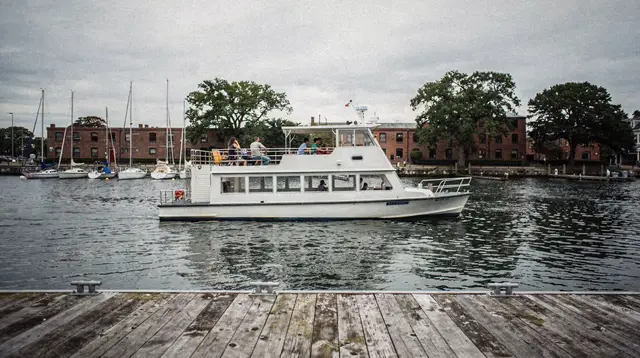
It depends on the outfit and the season. Classic sailing yachts and schooners are common around Annapolis, motor launches and water taxis link the harbor towns, and Baltimore’s Inner Harbor adds larger tour boats. Expect anything from a small sloop with a handful of passengers to a multi-deck vessel.
When is the best season for a Chesapeake sailing or seafood outing?
Late spring through early autumn is the core season, with the warmest, calmest conditions in summer and a milder, less crowded window in September and October. Blue crabs are a warm-weather catch, so the seafood side of the trip lines up with the same months.
Can I do Annapolis and Baltimore’s Inner Harbor in the same day from DC?
Yes, but it makes for a full day. Both are roughly 35-60 minutes’ drive from Washington and about 30 minutes from each other, so a single day usually means choosing one as the main stop and treating the other as a shorter add-on rather than splitting time evenly.
Is the Inner Harbor itself free to visit?
The harbor promenade and the walk along the water are free and open to everyone. The aquarium, science center, and historic ships docked there each charge their own separate admission, and those tickets aren’t the focus of this guide.
Do I need a car to reach Annapolis or the Inner Harbor from Washington?
A car is the practical choice for Annapolis, which has no direct rail line from DC. Baltimore is reachable by MARC train or Amtrak into the city center, with the Inner Harbor a short walk or ride from the station, so it works either with or without a car.
Cruises and Boat Tours
Verified deep-linked GetYourGuide tours. Book through these links and we earn a small commission at no cost to you.
GetYourGuide does not provide a product photo for this activity — the image shows the meeting point, photographed by us.