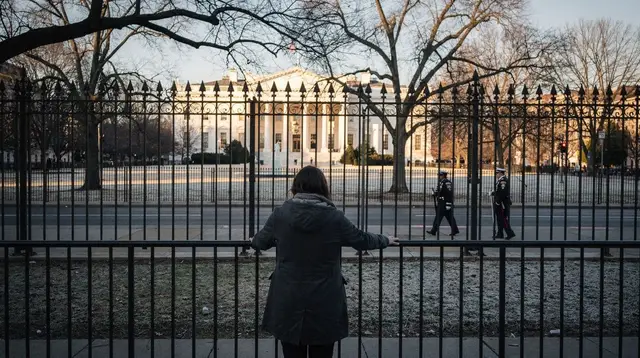
The Capitol and the White House: How Access Really Works
Can you just show up and tour the Capitol or the White House?
No. The Capitol offers a free guided tour, but it must be reserved online in advance, and it does not include the House or Senate galleries, which need a separate pass from a congressional office. The White House has no walk-up option at all — a tour request must go through a Member of Congress, or an embassy for foreign visitors, weeks to months ahead.
Two buildings, two very different booking systems
Washington’s monuments are open around the clock and ask nothing of you but a walk. The Capitol and the White House are not that kind of place. They are working seats of government — one holds daily legislative sessions, the other is a residence and office under permanent security — and both run on reservation systems that trip up visitors who assume “free” means “walk-up.” This page exists to correct that assumption, because the two most common mistakes on any Washington trip both happen right here: showing up at the Capitol expecting to watch a Senate vote, and showing up at the White House gate expecting any tour at all.
Get the access model right before you land, and both stops become straightforward. Get it wrong, and you’ll spend a morning outside a security perimeter with nothing to show for it.
The U.S. Capitol: free tour, separate gallery pass
The Capitol offers a genuinely free, guided walk through the building — the Rotunda, the Crypt, National Statuary Hall, and other historic spaces — run by the Capitol Visitor Center. It is not walk-up. Reservations open roughly 90 days ahead on the Visitor Center’s website, and the earliest morning slots go first, especially in cherry blossom season and around school breaks.
Here is the point that catches out even careful planners: the guided building tour does not include the House or Senate visitor galleries. Watching a floor session — actual debate, actual votes — requires a separate gallery pass, issued through your senator’s or representative’s office if you’re a US citizen, or through the appropriate visitor desk if you’re an international visitor. Many people book the tour, assume it covers everything, and only discover at the door that the galleries are a different line, a different pass, and a different office entirely.
| What you want | How to get it | Lead time |
|---|---|---|
| Guided building tour (Rotunda, Crypt, Statuary Hall) | Book online via the Capitol Visitor Center | Up to ~90 days ahead; book 2-3 weeks out off-peak |
| House/Senate gallery access (watch a session) | Request through your Member of Congress (US) or visitor desk (international) | Days to weeks; sessions aren’t always in progress |
| Grounds and exterior views | Walk up, no booking | None |
If Congress isn’t in session during your visit, the galleries are closed regardless of a pass — check the House and Senate schedules before you plan around watching a vote. The building tour runs on its own schedule and happens whether or not the chambers are active that day.
Nearby, the Library of Congress and the Supreme Court sit within a short walk and are worth pairing with a Capitol morning, since both have their own free but separately-booked access rules.
A [guided walking tour of Capitol Hill] with a licensed guide covers this whole cluster — the Capitol exterior, the Supreme Court, and the Library of Congress — with the historical context that a self-guided walk through Capitol Hill often misses. For anyone who wants a portrait against the dome without wrestling with security-line logistics, a [professional photo session at the Capitol] handles the framing and timing for you.
The White House: no walk-up option, period
The White House is the strictest access point on this list. There is no ticket counter, no same-day line, and no way to simply show up and get inside. A tour must be requested through a Member of Congress — your senator’s or representative’s office, if you’re a US citizen — or, for foreign nationals, generally through your country’s embassy in Washington. Submit the request 21 to 90 days ahead of your desired date, on a first-come, first-served basis. Tours run only on select mornings, Tuesday through Saturday, and are excluded on federal holidays.
A few practical notes that matter more than they seem:
- Requests can be denied or given no response at all — congressional offices process a high volume, and there’s no guaranteed outcome, so don’t build a trip’s centerpiece around it.
- Tours are cancelled without notice for security or scheduling reasons, sometimes the morning of. Build in a backup plan for that time slot.
- Every visitor is screened and must provide identifying information in advance; there’s no bringing a bag of typical size, and the security process resembles airport screening.
- Group size and dates are inflexible — you request a date range, not a specific day, and the office assigns what’s available.
If a request doesn’t come through in time, or you’d simply rather not manage the paperwork, the White House Visitor Center a few blocks away is free, open daily, needs no reservation, and covers the building’s history with exhibits and artifacts. It’s not a substitute for walking the actual halls, but it’s a real fallback rather than an empty gesture.
Building the visit around fixed schedules
Because both stops run on advance bookings and morning-only windows, they anchor a day rather than fitting around one. A workable pattern:
- Book the Capitol tour first, as soon as travel dates are fixed — it’s the more flexible of the two but still fills the best slots early.
- Submit the White House request through your Member of Congress or embassy the moment you have a date range, since the 21-to-90-day window is a request window, not a guarantee of a fast answer.
- Treat gallery access as a bonus, not a plan — request it once you’re closer to travel and Congress’s schedule is published, and don’t count on it if your trip is short.
- Pair the morning with Capitol Hill’s other sights — the Library of Congress, the Supreme Court, and the Capitol grounds themselves are walk-up and fill the gaps between timed appointments.
This is also where Capitol Hill differs from the National Mall memorials just west of it: the memorials ask nothing of your calendar, while the Capitol and White House dictate it. Plan the fixed appointments first, then build free-form time — museums, the Mall, Georgetown — around them, not the other way around.
For a deeper breakdown of each building’s process on its own, see touring the US Capitol: how it works and visiting the White House: how it works — both walk through the request forms, the offices to contact, and what to do if the paperwork stalls.
Pennsylvania Avenue: the walk in between
The mile or so of Pennsylvania Avenue connecting the Capitol to the White House is “America’s Main Street” — the route every inaugural parade has taken, lined with federal buildings, the Newseum’s former home, and the Old Post Office tower. It’s walkable, but the two ends don’t share a security perimeter, so treat it as a scenic transit corridor rather than a shortcut between timed appointments; budget the walk as its own block of time rather than squeezing it between a Capitol slot and a White House one.
An [private tour of America’s Main Street and the White House exterior] covers this exact stretch with a guide who can explain what each federal building along the way actually does, which is easy to miss walking it alone. For a slower, guide-led loop that includes the monuments beyond the avenue itself, a [golf cart tour past the monuments and the White House] covers more ground in less time than walking, which suits a short layover between a morning Capitol tour and an evening flight.
If you’re carrying bags for a same-day departure, note that neither building has visitor lockers — the White House’s security screening in particular does not allow bags of typical daypack size at all. A [luggage storage location near the White House] solves this cleanly if you’re heading straight to the airport or train after your tour, rather than hauling bags through two separate security checkpoints.
Ford’s Theatre and the Lincoln assassination trail
A few blocks from the White House, Ford’s Theatre and the Petersen House trace the last hours of Abraham Lincoln’s life — a natural pairing with a White House morning, since both sit within easy walking distance of the same Metro stations. A [guided walk from the White House to Ford’s Theatre] follows the actual route and timeline of the assassination, adding historical texture that a self-guided walk between the two government buildings doesn’t offer on its own. It also pairs naturally with the broader spy and crime history that runs through downtown Washington, much of it within a few blocks of the Capitol-to-White House corridor. If Washington’s political history is the draw for your trip generally, African American history in Washington, D.C. covers sites in the same downtown core, including several within walking distance of the Mall and Capitol Hill.
Accessibility and visiting with kids
Both buildings are step-free at their main visitor entrances and screen every visitor through security regardless of age or mobility, so strollers and mobility devices go through the same checkpoint as everyone else — budget extra time for it rather than assuming a fast-track. Older kids tend to get more out of the Capitol’s guided tour, with its Rotunda and Statuary Hall stops, than the White House process, which is mostly paperwork and waiting; if you’re travelling with younger children, the self-guided White House Visitor Center is the easier fit, since it has no reservation lead time and no risk of a cancelled morning derailing the day. See Washington, D.C. with kids and accessible Washington, D.C. for how these two stops fit into a family or accessibility-focused itinerary.
Getting here and what to combine it with
Capitol Hill sits on the Metro’s Blue, Orange, and Silver lines (Capitol South or Union Station stations), an easy add-on to a National Mall walking route or a stop on a broader monuments and memorials day. The White House sits closer to the White House grounds itself and the Ellipse, walkable from Federal Triangle or McPherson Square Metro stations.
Visitors coming from outside the region often bundle both into a single-day capital visit. A [full-day Washington DC tour departing New York] typically routes past the Capitol and the White House exterior alongside the Mall’s memorials, which works well if your gallery and tour requests didn’t come through in time and you need the exterior views and photo stops to still make the day worthwhile. A [guided city tour from New York] covers similar ground with narrated context on how the government buildings function, which pairs naturally with the access rules above.
For a longer capital stay, see how many days in Washington, D.C. you actually need once you factor in booking lead times, and things to do in Washington, D.C. for the rest of the itinerary around these two fixed appointments.
Government shutdowns and closures
One more variable specific to these two buildings: during a federal government shutdown, Capitol tours and gallery access can be curtailed or suspended entirely, and White House tour requests already in process may be delayed indefinitely. This is rare but not unheard of, and it’s worth checking current status close to your travel dates rather than assuming pre-booked confirmations are unaffected. The Smithsonian museums and National Mall memorials, by contrast, are far less likely to close in a shutdown, which is part of why they make a more reliable backup plan than a rebooked Capitol slot.
Capitol and White House access: frequently asked questions
How far ahead do I need to book a Capitol tour?
Reservations open roughly 90 days ahead through the Capitol Visitor Center, and popular morning slots fill first. Booking two to three weeks out is usually enough outside peak season, but during cherry blossom season or major congressional recesses, book as soon as your dates are fixed.
Does the Capitol tour let me watch Congress in session?
No. The guided tour covers the building — the Rotunda, Crypt, and historic chambers — but sitting in the House or Senate visitor galleries requires a separate gallery pass, obtained through your senator’s or representative’s office if you are a US citizen, or at the appropriate visitor desk for international visitors. The two do not include each other.
How do I get a White House tour?
US citizens request a tour through their Member of Congress; foreign nationals generally request one through their embassy in Washington. Submit the request 21 to 90 days ahead of your preferred date — tours run only on select mornings, Tuesday through Saturday, and are cancelled without notice for security reasons.
What if my White House tour request doesn’t come through?
The self-guided White House Visitor Center, a few blocks away, is free, open daily without a reservation, and covers the building’s history with exhibits and a short film. It’s a solid fallback, though it is not the same as walking through the actual residence.
Can international visitors tour the Capitol and White House?
Yes for both, but the process differs slightly. Capitol tours are booked the same way for everyone through the Visitor Center website. White House tours for non-US citizens are generally arranged through your country’s embassy in Washington rather than a Member of Congress, and the lead time is the same 21 to 90 days.
Are the Capitol tour and the White House tour free?
Yes, both are free of charge. The cost is the planning: advance reservations for the Capitol, and a formal request through official channels weeks to months out for the White House. Neither can be bought or upgraded for faster access.
What’s the difference between this and the National Mall memorials?
The memorials (Lincoln, Jefferson, WWII, and others) are outdoor, free, and open 24 hours with no booking needed. The Capitol and White House are working government buildings with security screening, fixed hours, and reservation systems — they run on the government’s schedule, not yours.
Capitol and Government Tours
Verified deep-linked GetYourGuide tours. Book through these links and we earn a small commission at no cost to you.
GetYourGuide does not provide a product photo for this activity — the image shows the meeting point, photographed by us.