A battlefield without the crowds
Most people who plan a Civil War trip from Washington think of Gettysburg first — and Gettysburg deserves the reputation. But roughly an hour to an hour and a half from the capital, in the opposite direction from the bus tours and gift shops, sits a battlefield that many Civil War historians consider just as pivotal, and that almost nobody visits in the same numbers: Antietam, on the outskirts of the small Maryland town of Sharpsburg.
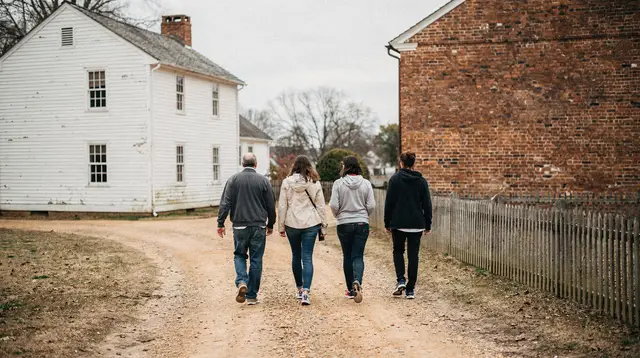
Where Gettysburg has grown into a small tourism economy of its own — ghost tours, licensed battlefield guides, a large paid museum, a downtown built almost entirely around the 1863 battle — Antietam has stayed rural. There is a visitor center, a driving tour along the battlefield road, and then acres of open farmland, split-rail fences, and a creek that gave one crossing point its grim nickname. On an ordinary weekday, you can walk long stretches of the site without seeing another visitor. That quiet is not an absence of significance. If anything, it is the opposite.
The bloodiest single day of the Civil War
On September 17, 1862, Union and Confederate armies collided across these fields and low ridgelines outside Sharpsburg in a battle that, by nightfall, had produced more than 22,000 combined casualties — killed, wounded, captured, and missing — in roughly twelve hours of fighting. It remains the single bloodiest day in American military history, a toll higher than the United States suffered on D-Day in 1944. Unlike Gettysburg, which unfolded over three days across a wider landscape, Antietam concentrated its violence into one long day across a compact stretch of ground, which is part of what makes walking the site today feel so immediate: the distances between the battle’s worst moments are short enough to cover on foot.
Three names anchor the battlefield’s memory, and all three are stops on the park’s driving tour: the Cornfield, where some of the war’s most intense and costly fighting broke out in the battle’s opening hours; Bloody Lane (also called the Sunken Road), a farm lane that became a killing ground as Confederate defenders held it against repeated Union assaults; and Burnside Bridge, a stone bridge over Antietam Creek where Union troops eventually forced a crossing after a costly delay. Each stop has simple markers and interpretive signage, but no crowds jostling for a photo — you can stand at Bloody Lane for as long as you want.
The battle itself did not produce a clear tactical victory for either side, but its aftermath changed the direction of the war: with Confederate general Robert E. Lee’s invasion of the North turned back, President Abraham Lincoln used the outcome as the moment to issue the preliminary Emancipation Proclamation, reframing the Union war effort around ending slavery. A single day’s fighting in a Maryland cornfield, in other words, helped set the course of the rest of American history.
Why the quiet is the point
If you’ve already visited Gettysburg, or read about its scale, it’s worth being direct about what Antietam does not have: no large battlefield museum with a ticketed film-and-exhibit combination, no fleet of licensed battlefield guides available for hire at a visitor desk, no cluster of ghost tours and Civil War-themed shops radiating out from the park gates. There is a visitor center with exhibits and a short film, and a modest entrance fee, but nothing resembling the surrounding tourism infrastructure that has grown up around Gettysburg over more than a century.
That is not a compromise — for a certain kind of traveler, it is the entire appeal. Antietam lets you experience a Civil War battlefield the way most of them actually exist: as farmland, largely undisturbed, where the land itself does most of the interpretive work. The Cornfield still grows corn. The lane is still sunken. Standing at Burnside Bridge without another visitor in sight, it’s easier to grasp the scale of a single day’s loss than it sometimes is amid Gettysburg’s crowds, its parking lots, and its gift shops. If you want a reflective, unhurried battlefield visit rather than a full day of programming, this is the site built for that.
Getting there and combining it with Harpers Ferry
Antietam sits roughly an hour to an hour and a half from Washington by car — the same general range that applies to the wider Civil War country region, including Harpers Ferry, Frederick, and Gettysburg itself. A car is genuinely useful here: the battlefield’s stops are spread along several miles of driving road, and there is no realistic way to see the site without one, whether you drive yourself or join a guided tour.
The natural pairing is Harpers Ferry, West Virginia, which sits only about 25 minutes from Sharpsburg and shares a slice of the same 1862 campaign — Confederate forces captured the Harpers Ferry garrison just days before the battle at Antietam, and the two sites are often told as connected chapters of the same story. Several guided options run this exact combination from Washington, folding both stops into a single day so you’re not doing two separate long drives on two separate days.
If you’d rather explore the battlefield with a dedicated guide who can walk you through the day’s timeline stop by stop, an Antietam guided battlefield tour from Washington DC covers the drive and the narrative in one outing, and a Harpers Ferry and Antietam battlefield tour is built specifically to link the two sites in a single day. A dedicated guide to visiting Harpers Ferry as a day trip from Washington covers that town on its own terms, in case you’d rather split the two stops across separate visits instead of packing both into one day.
For travelers who’d rather not drive themselves at all but still want to cover the battlefield’s full geography — the Cornfield, Bloody Lane, and Burnside Bridge are not within easy walking distance of each other — an Antietam highlights caravan tour with transportation handles the logistics between stops. And if you want to extend the day into the surrounding Maryland countryside afterward, a West Virginia Berkeley Springs tour with a Roman bath experience is a relaxed, unrelated way to close out a rural day trip that started at a battlefield.
If you’re weighing whether to drive yourself or book a seat on an organized tour at all, a broader guide comparing train and bus day trips from Washington and one on driving and parking in Washington, DC both cover the tradeoffs for this kind of countryside excursion, where a car (yours or a tour operator’s) is genuinely the more practical option than public transit.
Extending the trip toward Gettysburg
Antietam and Gettysburg sit close enough together, and close enough to the same September-and-July 1862-1863 story, that some travelers prefer to treat this corner of Maryland and Pennsylvania as one extended Civil War detour rather than two separate day trips. If that’s the kind of week you’re building, it’s worth reading a full guide to Gettysburg’s battlefield tours and a dedicated Gettysburg day trip guide before you commit to a route, since Gettysburg’s scale genuinely rewards more planning than Antietam does.
Gettysburg has also grown a small industry of specialty tours that Antietam’s quieter site never developed — evening ghost walks, reenactment-style living history, and museum add-ons aimed at families. If any of that appeals once you’ve had your fill of Antietam’s open fields, a Gettysburg Civil War field surgery experience puts the era’s medicine in front of you the way Harpers Ferry’s own medicine-themed tour does closer to Antietam, and a Culp’s Hill battlefield tour with a licensed guide covers a stretch of the Gettysburg field that a first visit often skips. Travelers who want the deeper local-history angle on the medical side of the campaign, closer to home, can also look at a Harpers Ferry and Civil War medicine tour, which stays within the same Antietam-Harpers Ferry orbit rather than pushing all the way to Pennsylvania.
For a straight answer on which of the two battlefields deserves your one available day, the dedicated Gettysburg versus Antietam comparison guide walks through the tradeoffs in more depth than the table below can, and the region-wide Civil War battlefields guide situates both sites alongside Fredericksburg, Harpers Ferry, and Richmond for anyone building a longer trail.
Antietam versus Gettysburg, at a glance
| Antietam | Gettysburg | |
|---|---|---|
| Distance from DC | ~1-1.5 hours | ~1-1.5 hours |
| Battle length | One day (Sept 17, 1862) | Three days (July 1-3, 1863) |
| Casualties | Over 22,000 in a single day | Over 50,000 over three days |
| Museum/paid add-ons | Small visitor center, modest fee | Large paid museum, film, licensed guides |
| Crowds | Light, even on weekends | Heavy in summer, tour buses common |
| Surrounding town | Small, largely residential Sharpsburg | Tourism-oriented Gettysburg |
| Best for | A quiet, self-paced visit | A full day of programming and depth |
If you’re weighing which battlefield to prioritize on a limited schedule, it’s worth reading the dedicated Gettysburg-versus-Antietam comparison before you decide — the honest answer often depends on how much crowd tolerance you have for the day, and whether you’d rather spend a half-day or a full day away from Washington.
Planning your visit
Because there’s no large ticketed infrastructure to plan around, an Antietam day is mostly about timing your drive and deciding how much of the surrounding region you want to fold in. A half-day visit — the visitor center exhibits, the film, and a slow drive of the battlefield road with stops at the Cornfield, Bloody Lane, and Burnside Bridge — is enough to take in the site properly without rushing. Add Harpers Ferry in the afternoon and it becomes a full, satisfying day trip from the capital region without ever feeling overscheduled.
A few practical notes worth carrying with you: the battlefield is almost entirely outdoors, so check the weather before you go, since there’s little shelter beyond the visitor center itself. Bring water and comfortable walking shoes if you plan to walk any of the trails at Bloody Lane or Burnside Bridge rather than only stopping at the roadside pull-offs. And because the site is rural, cell coverage can be patchy in spots — download or print any directions you need for the drive to Harpers Ferry before you set out.
For travelers building out a broader Civil War itinerary from Washington, Antietam fits naturally alongside stops in Frederick and Fredericksburg, and the wider Civil War country region page lays out how the battlefields relate to each other geographically. A dedicated Frederick day trip guide and Fredericksburg day trip guide each cover those towns in more depth than a single day trying to see everything ever allows. A multi-day version of this trip is also covered in a dedicated three-day Civil War trail itinerary if you want to string several sites together rather than picking just one or two, and a six-day DC and Civil War country itinerary folds the whole region into a longer capital-area trip.
If your schedule only allows a single detour into this part of Maryland and Virginia, it’s genuinely worth asking whether Gettysburg’s scale and crowds are what you’re after, or whether a quieter, more intimate battlefield like Antietam — paired with Harpers Ferry — better fits the kind of day you want. Neither choice is wrong; they’re simply different ways of encountering the same war. Whichever you pick, it helps to know when to visit Washington DC more generally, since the same spring and fall windows that suit the capital’s monuments and cherry blossoms also happen to be the most comfortable stretches for a full day of walking open battlefield ground in Maryland.
Where Antietam sits in the wider region
Antietam belongs to the Civil War country region, a cluster of Civil War-era sites west and northwest of Washington that also includes Gettysburg, Harpers Ferry, Frederick, and Fredericksburg. Unlike the The National Mall & Its Memorials core of the capital, where nearly everything is free, walkable, and reachable by Metro, this region is built around driving between small towns and rural sites — which is exactly why a car, whether your own or a tour operator’s, matters more out here than it does inside the district.
Travelers who haven’t yet settled on how many of these Civil War-era stops to attempt in one trip may find it useful to read how many days to spend in Washington, DC as a starting point, since a single Antietam detour fits comfortably into even a short capital-area visit, while a fuller circuit through Gettysburg, Harpers Ferry, and Frederick starts to need a dedicated extra day or two of its own.
Antietam and Sharpsburg: frequently asked questions
Is Antietam worth visiting if you’ve already been to Gettysburg?
Yes — Antietam is a smaller, quieter battlefield near Sharpsburg, Maryland, where the single bloodiest day of the entire Civil War took place, and it draws a fraction of Gettysburg’s visitors. It rewards travelers who want a rural, contemplative site rather than a museum-and-crowds experience, and it pairs easily with a stop at nearby Harpers Ferry.
How long does it take to drive to Antietam from Washington, DC?
Roughly an hour to an hour and a half, depending on traffic through the outer Maryland suburbs and which route you take toward Sharpsburg.
Is Antietam more or less crowded than Gettysburg?
Far less crowded. Gettysburg draws large seasonal crowds, tour buses, and a substantial commercial district around the park; Antietam is a working rural landscape with a small visitor center and long stretches where you may be the only car on the battlefield road.
Can I combine Antietam with Harpers Ferry in one day?
Yes, easily. The two sites sit about 25 minutes apart, and several guided tours from Washington, DC pair them into a single day trip that also touches on the Antietam campaign’s broader story.
What actually happened at Antietam?
On September 17, 1862, near the town of Sharpsburg, Union and Confederate forces fought the single bloodiest day of combat in American history, with combined casualties exceeding 22,000 in about twelve hours — more than the United States suffered on D-Day.
Is there an entrance fee for Antietam National Battlefield?
The National Park Service charges a modest per-person or per-vehicle entrance fee, which is far lower than Gettysburg’s paid museum and guide add-ons, and there is no large commercial visitor infrastructure to budget for beyond that.
Is Antietam suitable for a quick stop, or does it need a full day?
A focused visit — the visitor center film, the battlefield driving tour, and a walk at a key stop like Bloody Lane or Burnside Bridge — can be done in two to three hours, which is why it works well as half of a day trip alongside Harpers Ferry.