Civil War Battlefields Near Washington, D.C.: A Complete Guide
Which Civil War battlefields are near Washington, D.C.?
Gettysburg (Pennsylvania), Antietam near Sharpsburg (Maryland), Harpers Ferry (West Virginia), Fredericksburg (Virginia), and Frederick (Maryland) are all within roughly one to one and a half hours of DC. The battlefield grounds and driving tours are free at each; museums, films, and licensed guides are paid extras.
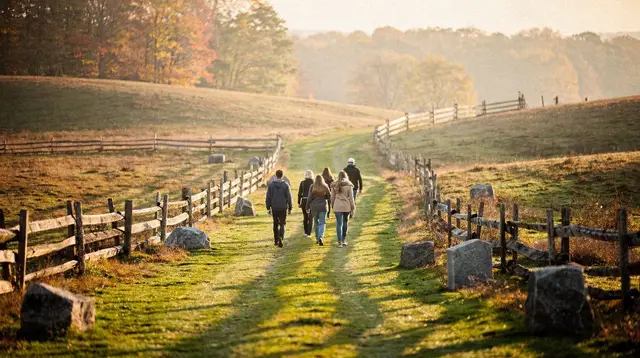
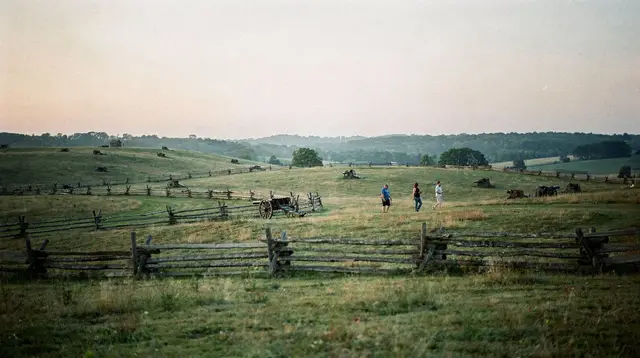
The Civil War tore through this stretch of the mid-Atlantic more than almost anywhere else in the country, and the battlefields it left behind ring Washington, D.C. on nearly every side. Within a day trip of the capital, you can stand on the ground where the war’s bloodiest single day happened, walk the field where Pickett’s Charge broke against a stone wall, or trace the siege lines of a town that changed hands eight times in four years. This guide covers five of those places — Gettysburg, Antietam, Harpers Ferry, Fredericksburg, and Frederick — as military history, not as scenery.
That distinction matters because two of these names get misfiled constantly. Gettysburg is in Pennsylvania, not Virginia. Harpers Ferry is in West Virginia, not Virginia either. Both get pulled into the mental category of “Virginia Civil War sites” because they’re discussed in the same breath as Fredericksburg and the Shenandoah Valley campaigns, but neither one is actually inside the state. If you’re mapping a trip, that’s the first correction worth making.
It’s also worth separating this page from its neighbor. Harpers Ferry appears here and in our Shenandoah and Skyline Drive guide, and that’s not a duplication — it’s two different lenses on the same town. The Shenandoah guide treats Harpers Ferry as scenery: the view from the bluffs, the river confluence, the hiking trails. This page treats it as a battlefield: the 1862 siege, the fortifications, the strategic chokepoint it represented. Both are true about the same place; you’re reading the military-history half.
Why these five sites, and how close they are
All five sites sit within roughly one to one and a half hours of DC by car, which is what makes them a realistic day trip rather than a multi-day expedition. None of them are reachable by Metro — this is a driving trip, or one built around a guided tour that handles the driving for you.
| Site | State | Approx. drive from DC | What happened there |
|---|---|---|---|
| Antietam | Maryland | 75-90 min | Single bloodiest day in American military history, September 1862 |
| Harpers Ferry | West Virginia | 75-90 min | 1862 siege; changed hands repeatedly through the war |
| Frederick | Maryland | 60-75 min | Civil War hospital city, Barbara Fritchie legend, Monocacy nearby |
| Gettysburg | Pennsylvania | 90 min | Turning-point three-day battle, July 1863, Pickett’s Charge |
| Fredericksburg | Virginia | 90 min | Site of four major battles, including the December 1862 assault |
These drive times track closely with the general range for day trips from DC: Northern Virginia sites nearer the city clock in at 15-30 minutes, while this Civil War cluster and the Shenandoah sit a step further out, in the 60-90 minute band.
When to go
These are open-air sites first, and the season changes the experience more than at an indoor museum. Summer brings the longest daylight, useful given how much ground there is to cover at Gettysburg and Fredericksburg, but also the most heat and the least shade — the fields at Antietam and Gettysburg offer almost none. Winter thins the crowds substantially and gives a starker, quieter read of the ground (some visitors specifically prefer seeing Antietam’s Sunken Road or Gettysburg’s fields under grey winter light), but the visitor centers keep shorter hours and an exposed ridge walk is a genuinely cold proposition.
Spring and fall split the difference and are generally the easier months for a first visit, with milder temperatures and still-long enough days to combine a battlefield with the drive out and back. Whatever the season, check each park’s own posted hours before setting out — they aren’t identical across the five sites and can shift around holidays.
Gettysburg: the turning point, and where the money actually goes
Gettysburg National Military Park is the best-known of the five, and the one most likely to eat a full day. The battlefield itself — nearly 6,000 acres, dozens of monuments, the 24-mile auto tour route — is free to drive and walk, run by the National Park Service like any other unit in the system.
What isn’t free: the Gettysburg Museum and Visitor Center, the orientation film, and licensed battlefield guides. These run through the Gettysburg Foundation, the park’s nonprofit partner, not the Park Service itself — a distinction worth knowing before you arrive expecting everything to be included the way the National Mall memorials are. A guided walk with a licensed battlefield guide is the single best way to actually understand troop movements across a field that otherwise reads as open farmland with cannons scattered around it; the self-guided auto tour gets you to the same stops but leaves the tactical picture to your own map-reading.
If Gettysburg is the centerpiece of your trip rather than a stop on the way to somewhere else, a guided day trip from DC removes the driving and the guesswork about where to park. A guided battlefield tour from Washington DC to Gettysburg covers the transportation and typically includes a knowledgeable guide walking you through the key positions.
Gettysburg also supports a second, smaller layer of visits beyond the battlefield itself, aimed at people who want more than the auto tour and the museum. A Civil War field surgery experience and reenactment puts the medical side of the war — the part this guide’s Frederick section touches on from the hospital-city angle — in front of you directly, rather than behind museum glass.
For evenings, once the battlefield closes, the town leans into its reputation as one of the most reportedly haunted places in the country: options range from a Civil War ghosts walking tour focused on the battle’s aftermath to a lighter haunted pub crawl for visitors who want the town’s folklore alongside its history rather than a solemn evening. None of these replace the battlefield visit itself; they’re what fills the evening after the auto tour route closes, on a trip built around things to do in Gettysburg more broadly. A dedicated look at Gettysburg’s ghost-tour scene, separate from the battlefield history, lives in our Gettysburg ghost tours guide.
If you’re deciding between Gettysburg and Antietam as the single site to prioritize, our Gettysburg vs. Antietam comparison walks through the trade-offs — scale and fame versus a smaller, more concentrated and arguably more affecting visit — in more depth than fits here. And if Gettysburg is your one full day trip rather than part of a longer Civil War loop, our Gettysburg day trip guide covers logistics this page doesn’t: parking, timing, and how to structure the hours around the museum and the auto tour.
Antietam: the single bloodiest day
Antietam National Battlefield, just outside Sharpsburg, Maryland, is smaller and quieter than Gettysburg, and that quiet is part of what makes it affecting. On September 17, 1862, roughly 23,000 men were killed, wounded, or went missing here in a single day — still the bloodiest day in American military history. The battlefield’s landmarks (the Sunken Road, known afterward as “Bloody Lane,” and Burnside Bridge) are compact enough to see thoroughly in a half-day, on foot or by the park’s driving loop, both free.
Antietam pairs naturally with Harpers Ferry on the map — they’re close enough together that visitors doing a Maryland/West Virginia loop often combine them in one day, saving Gettysburg and Fredericksburg for separate trips given how much each deserves on its own. Our Antietam day trip guide covers that loop, and a similarly structured guided battlefield tour from Washington DC to Antietam handles the driving for visitors who’d rather not navigate the back roads around Sharpsburg themselves.
Harpers Ferry: the town that changed hands eight times
Harpers Ferry sits at the confluence of the Potomac and Shenandoah rivers, in West Virginia — a fact that surprises a lot of first-time visitors who assume, given its constant pairing with Virginia campaigns, that it must be in Virginia. Its strategic value (rail lines, river crossings, a federal armory) made it a prize both armies wanted, and the town changed hands repeatedly over the course of the war, culminating in a major Confederate siege in September 1862, just before Antietam.
The historic lower town, preserved as a National Historical Park, is free to walk, with interpretive sites covering the siege, the armory, and John Brown’s earlier 1859 raid (a prelude to the war rather than a battle itself). This page sticks to that military history; if you’re more interested in the view from Maryland Heights or the hiking around the confluence, that’s covered in the Shenandoah and Skyline Drive guide instead.
Given how close Harpers Ferry and Antietam sit to each other, several guided options cover both in a single outing rather than asking you to choose. A Harpers Ferry and Antietam battlefield tour is built around exactly that pairing, while a Harpers Ferry and Civil War medicine tour connects the siege here to the same wartime medical history that Frederick’s hospitals represent. For a Harpers Ferry visit on its own, a Harpers Ferry Civil War history guided tour or a guided tour of the town’s historic sites both work as a standalone day trip from DC without a car. Full logistics for getting there and back are in our Harpers Ferry day trip guide.
Fredericksburg: four battles in one small city
Fredericksburg, Virginia, saw more fighting pass through it than almost any other town in the war — four major battles (Fredericksburg, Chancellorsville, the Wilderness, and Spotsylvania Court House) were all fought within a roughly 17-mile radius of the city between 1862 and 1864. The December 1862 Battle of Fredericksburg itself, where Union troops made a series of doomed frontal assaults on entrenched Confederate positions at Marye’s Heights, is the one most visitors come to see first.
Fredericksburg & Spotsylvania National Military Park manages the battlefield sites with the same free-grounds model as the others: driving tours, walking trails, and a visitor center with exhibits. The town’s compact historic district also makes it an easy stop to combine with a broader look at Northern Virginia history if you’re building a longer Civil War-themed itinerary. Trip logistics — driving time, parking near the historic district, and how much time to set aside — are covered separately in our Fredericksburg day trip guide.
Frederick: the hospital city
Frederick, Maryland, played a different role than the other four — it wasn’t the site of a major pitched battle so much as a hub the war passed through repeatedly. After Antietam, Frederick’s churches and public buildings were converted into makeshift hospitals for thousands of wounded from both armies, a chapter documented at the National Museum of Civil War Medicine downtown. It’s also where the legend of Barbara Fritchie and her defiant flag (later immortalized in verse, whether or not the episode happened exactly as told) is set.
Frederick makes a natural first or last stop on a loop that also takes in Antietam, since it sits roughly midway between DC and Sharpsburg. Our Frederick day trip guide has the practical details for building that stop into a full day out.
Planning the trip: one battlefield, or several
Trying to “do” all five sites in a single day is unrealistic — Gettysburg and Fredericksburg alone can each fill a full day for a visitor who wants more than a drive-by. A more realistic split:
- One focused day: pick a single site (Gettysburg for the biggest and best-known battle, Antietam for the most concentrated and sobering visit) and give it the whole day, including the paid museum/film add-ons where relevant.
- A Maryland/West Virginia loop: Antietam and Harpers Ferry together, since they’re close and each can be seen thoroughly in half a day.
- A multi-day Civil War trip: spread Gettysburg, Antietam, Harpers Ferry, and Fredericksburg across two or three days, basing yourself in DC and driving out and back each day, or overnighting near Gettysburg to catch early morning light on the field.
If you’d rather not drive yourself, DC-based guided options exist for the most popular single-day target. Closer to the city, a semi-private walking tour tracing Lincoln and the Civil War through downtown DC is a good complement even if you’re not driving out to a battlefield at all — the war’s political and human toll left its mark on the capital itself, not just on the fields outside it.
What to bring and what to expect
None of these battlefields have the crowd-control infrastructure of the National Mall. Expect open fields, limited shade, gravel paths at some stops, and weather that swings from humid summer heat to genuinely cold, windy winters — layer accordingly and bring water regardless of season. Cell coverage is patchy in spots at Antietam and parts of Gettysburg, so download or print a park map rather than relying on a live connection once you’re out on the auto tour route.
Because these are outdoor historical sites first, allow more time than you think you need. A visitor expecting a one-hour stop at Gettysburg routinely finds themselves there for four or five.
Civil War Battlefields Near DC: Frequently Asked Questions
Is Gettysburg in Virginia?
No. Gettysburg is in Pennsylvania, about 90 minutes north of Washington, D.C. It’s easy to lump it in with Virginia’s Civil War sites because it’s discussed alongside them so often, but it sits well outside Virginia’s borders.
Is Harpers Ferry in Virginia?
No. Harpers Ferry is in West Virginia, at the confluence of the Potomac and Shenandoah rivers. It border-hops close to both Virginia and Maryland, which is why visitors often assume it’s in Virginia — it isn’t.
Is it free to visit Gettysburg National Military Park?
Yes, the park grounds, the auto tour roads, and most monuments and markers are free to access. The Gettysburg Museum and Visitor Center, the film, and licensed battlefield guides are paid, run through the nonprofit Gettysburg Foundation rather than the National Park Service itself.
How far is Antietam from Washington, D.C.?
Antietam National Battlefield, near Sharpsburg, Maryland, is roughly 75-90 minutes from DC by car, similar to the drive time for Gettysburg and Harpers Ferry.
Can I visit more than one battlefield in a day?
It’s possible but tight. Antietam and Harpers Ferry sit close enough together to pair comfortably in a day; Gettysburg and Fredericksburg are each substantial enough, and far enough from the others, to deserve their own day if you want more than a drive-through.
Do I need a guide to understand the battlefields?
No, self-guided driving and walking tours with the park’s own maps work well and are free. A licensed battlefield guide (a paid add-on at Gettysburg in particular) adds depth for visitors who want a structured, narrated walk through the fighting.
Is Harpers Ferry only about the Civil War?
No. Harpers Ferry’s Civil War role (it changed hands several times and endured a major siege) is one layer of a longer history, including John Brown’s 1859 raid and the town’s scenic setting at the river confluence. This guide focuses on the military history; the surrounding landscape and hiking are covered separately.
Civil War Battlefield Tours
Verified deep-linked GetYourGuide tours. Book through these links and we earn a small commission at no cost to you.
GetYourGuide does not provide a product photo for this activity — the image shows the meeting point, photographed by us.