Washington DC Cooking Classes: A Hands-On Break From Monuments
Are cooking classes a good alternative to sightseeing in Washington, D.C.?
Yes — a cooking class is one of the few Washington activities that happens entirely indoors, in a small group, at your own pace. It suits travelers who have already covered the National Mall and want something different: a hands-on, seated experience rather than more walking or another queue.
Why a cooking class fits between the monuments
Most first-time visitors to Washington build their trip around the free core: the National Mall, the Smithsonian museums, the memorials that stay open around the clock. It’s a remarkable amount to see for no ticket price at all, and by day two or three most travelers have covered the essentials laid out in things to do in Washington, D.C.. That’s usually the point where the question changes from “what else is free” to “what else is there to actually do.”
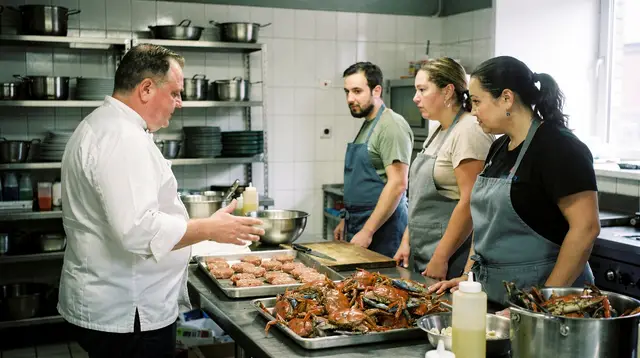
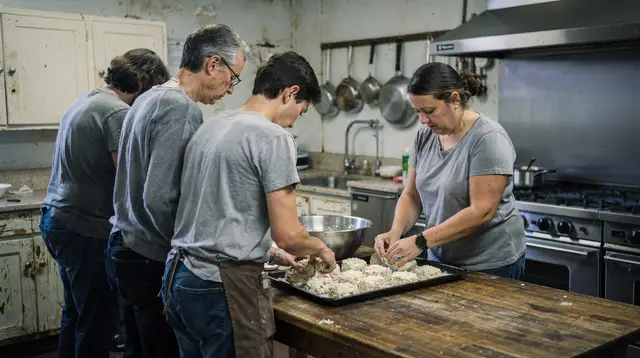
A cooking class answers that question in a completely different register than another walk down the National Mall or another museum hall. Instead of moving through a space and looking at things, you sit or stand at a counter, work with your hands, and end the session with a finished plate in front of you. It’s a shift from observing the city to doing something inside it, in a small group, with an instructor guiding the pace.
This is also one of the very few Washington activities that is entirely indoors, start to finish. That matters more than it might sound: this region’s humid subtropical climate means summer afternoons can hit the 90s with sudden thunderstorms, and winter occasionally brings snow that shuts things down for a day or two. When the forecast turns, a class scheduled in a kitchen doesn’t care what’s happening outside. See rainy day Washington, D.C. for more on planning around weather generally.
What this page is — and isn’t
It’s worth being precise about what a cooking class actually is, because “food” and “cooking” get lumped together in a lot of trip planning and they’re not the same activity.
A food tour — covered for this region in Richmond Food Tours: Tasting the River City — is a guided walk between multiple restaurants, stalls, or vendors, where a guide narrates the food culture and you taste dishes that someone else has already prepared. It still involves walking, still covers distance, and the food itself is the destination rather than the process.
A cooking class is the opposite structure. You stay in one room. Nobody walks you between locations. The point isn’t tasting a city’s food scene broadly — it’s learning to make one or two specific dishes yourself, with your own hands, under instruction. If you finished a food tour and thought “I wish I’d made that instead of just eaten it,” a cooking class is the activity you were actually looking for.
It’s also worth separating this from Washington’s active, outdoor tour options. A bike or scooter tour covers ground — you’re moving through neighborhoods, racking up mileage, seeing the city go past. A cooking class covers none of that; there’s no route, no distance, no outdoor component at all. If your legs need a rest day, a cooking class is arguably the most restful “activity” on the entire local roster, precisely because it asks you to stand still.
A brief comparison
| Activity type | Indoor / outdoor | Physical pace | What you come away with |
|---|---|---|---|
| Cooking class | Indoor | Low — mostly standing or seated at a counter | A dish you made yourself, and the technique behind it |
| Food tour | Outdoor, walking between stops | Moderate — walking distance varies | Tastes of several dishes made by others |
| Bike/scooter tour | Outdoor, covering distance | Higher — active pedaling or riding | Ground covered, sights seen along a route |
| Museum visit | Indoor, self-paced | Low to moderate — depends on how much you walk | Exhibits seen, information absorbed |
None of these is objectively “better” — they solve different problems on different days of a trip. A cooking class earns its place specifically as the low-effort, fully indoor, hands-on option, which is a combination none of the others quite match.
Who this actually suits
This isn’t aimed at serious foodies chasing a city’s signature dish — Washington doesn’t have one tidy culinary specialty the way some cities do, and this page won’t invent one. It’s aimed at a more practical traveler profile: someone who has already spent a day or two on the free federal core — the Smithsonian museums, Capitol Hill, the Tidal Basin — and wants an afternoon that doesn’t involve more standing in galleries or more walking between memorials.
It also suits:
- Couples or small groups looking for something more interactive than a dinner reservation, but less physically demanding than a full day trip.
- Travelers dealing with bad weather, whether that’s a summer downpour or a cold front, who need an indoor plan B that doesn’t feel like a consolation prize.
- Anyone burned out on “looking” activities. After enough museum halls and monument photo stops, a task that engages your hands rather than your eyes and feet can feel like a genuine break, not just a different kind of sightseeing.
- Groups traveling with older kids or teens who want a shared activity everyone can do together, rather than splitting up between exhibits at different paces — see also Washington, D.C. with teenagers.
It suits less well: anyone with only a single day in the city (see Washington, D.C. with a tight schedule), where every hour is likely already claimed by the Mall’s free core, or travelers whose main goal is tasting broadly across many dishes rather than making one well.
What a session generally involves
Details vary by provider, but the shape of a hands-on class is fairly consistent across cities, including Washington. A small group works alongside an instructor through a set menu — often built around a central technique, like making fresh pasta from scratch as part of a three-course meal — moving from raw ingredients to a finished plate over the course of the session. Some classes lean toward a single cuisine’s technique; others, like an Italian fusion class built around a three-course menu, blend approaches rather than sticking to one tradition.
Because the group size tends to be small, the pace stays approachable for people who’ve never cooked much beyond home basics. Nobody is racing a clock, and there’s no wrong way to be “behind” — the instructor’s job is to keep everyone moving toward the same finished dishes. That’s a genuinely different rhythm than, say, timing your entry to the National Museum of African American History and Culture around a free timed pass, or working out how to see the U.S. Capitol tour and gallery separately. There’s no reservation window to hit, no pass to print, no queue.
This page deliberately doesn’t quote a price or a session length, because the source material behind it doesn’t fix either — durations and costs vary by class and by provider, and travelers should confirm both when booking rather than assume a figure from a general guide like this one.
Where this fits in a broader itinerary
If you’re building out a multi-day plan, a cooking class slots naturally into a day that’s otherwise light on fixed appointments — it doesn’t need to compete with timed passes for the Smithsonian’s two ticketed museums, or with an advance-booked Capitol tour. It pairs well with a day trip you’re not spending, essentially: rather than heading out to Northern Virginia or Maryland, you stay local and spend the afternoon in a kitchen instead.
It’s also a reasonable evening-adjacent activity if you’re spending a night in the city’s dining and drinks scene — for travelers curious about that side of Washington more broadly, see Washington, D.C. bars and nightlife and wineries and breweries near Washington, D.C., both of which cover the drinking-and-eating end of the city that a cooking class complements rather than duplicates.
For travelers stitching together a broader week, a class like this fits comfortably into the flexible middle days of longer plans such as five days: DC and day trips or seven days: capital region grand tour, where not every hour needs to be a monument or a museum.
How to choose between the options
With a short, curated list of bookable classes, the main distinctions worth weighing are the cuisine focus and whether the format suits a couple, a small group, or a slightly larger party.
A class centered on hand-making pasta through a full three-course meal leans into one classic technique in depth, while an Italian fusion three-course class gives a broader, less single-technique experience across the same three-course structure. Neither is a food tour and neither will have you covering distance across the city — both keep you in one room, working with your hands, for the length of the session.
Beyond cuisine, it’s worth checking group size, any dietary accommodation the provider offers, and what happens at the end of the session (most classes conclude with the group sitting down to eat what they made, which is generally part of the appeal). None of these details are fixed enough to state as a blanket rule here, so confirm them directly with the class you’re considering before booking.
Pairing a class with the rest of your trip
A cooking class works best as one piece of a larger plan rather than the whole day. Because it’s indoor and doesn’t demand much walking beforehand, it pairs naturally with a morning that’s already fairly relaxed — a slow start after a late arrival, or a half-day spent closer to your hotel rather than out on a full day trip. If your itinerary has you weighing how much ground to cover generally, how many days in Washington, D.C. is worth a look before deciding which afternoon to give up to a class instead of sightseeing.
It also slots in well around trips that are themselves food-adjacent without being cooking-focused. Travelers spending part of a day in Georgetown or comparing it with Old Town Alexandria often already have eating and browsing built into that afternoon; a cooking class the following day extends that same interest in food without repeating the same kind of outing. The same logic applies to travelers who’ve already spent a morning at a market or food hall covered in food and markets in Washington, D.C. — a class is the natural next step from browsing food to making it.
For visitors basing a trip around one of the day-trip regions rather than staying entirely downtown, a cooking class is also a reasonable way to use a “home base” day. Someone splitting time between the capital and a Northern Virginia day trip to Alexandria or Mount Vernon, or a Maryland run out to Baltimore, can use a non-travel day in the city for a class rather than squeezing in another museum. It’s a lower-key way to spend a day that’s meant to be a break from the driving and walking that day trips otherwise involve.
A note on budgeting the day
Travelers planning a trip around Washington, D.C. on a budget sometimes assume a cooking class doesn’t fit, since so much of the city’s core appeal is free. That’s a fair instinct, but it’s worth treating a class as a deliberate splurge on one specific day rather than a daily habit — the same way a splurge dinner or a single paid museum ticket might fit into an otherwise budget-conscious week. Because the format includes a full meal at the end, it can also double as that day’s lunch or dinner rather than being an additional expense stacked on top of a restaurant booking.
It’s also worth keeping in mind alongside general planning advice like Washington, D.C. travel mistakes to avoid: booking something structured like a class on a day when you also have a timed pass for the Smithsonian or a reserved Capitol tour slot risks a scheduling squeeze. Giving the class its own day, or at least its own half-day, keeps the session from feeling rushed on either end.
Frequently asked questions about Washington, D.C. cooking classes
Is a cooking class the same as a food tour?
No. A food tour, like the ones covered in Richmond food tours, is a guided walk between restaurants or stalls where you taste what others have prepared. A cooking class keeps you in one place and has you doing the cooking yourself, from start to finish.
Do I need to know how to cook already?
No prior experience is assumed. Classes are built around clear step-by-step instruction in a small group, so first-timers and confident home cooks generally follow the same format side by side.
What should I wear or bring?
Comfortable, closed-toe shoes and clothes you don’t mind getting a little flour or sauce on are the general rule for any hands-on kitchen session; specific requirements vary by class, so check the details of the class you book.
Is this a good rainy-day activity in Washington?
Yes. Because the entire session happens indoors, it is one of the more reliable ways to fill a wet or bitterly cold afternoon without losing the day to weather, unlike the outdoor memorials or the Mall.
Will I actually eat what I make?
Generally yes — most hands-on classes end with the group sitting down to eat the dishes they just prepared, which is part of what makes the format feel social rather than purely instructional.
Is a cooking class a good group or date activity?
It tends to work well for small groups, couples, or families with older kids, since everyone is doing the same hands-on task together in one room rather than splitting up to look at different exhibits.
How does this compare to a bike or scooter tour?
They’re opposites in structure. A bike or scooter tour covers ground and puts you outdoors moving through the city; a cooking class is stationary and indoors, with the “coverage” being a menu rather than a distance.
Cooking Classes
Verified deep-linked GetYourGuide tours. Book through these links and we earn a small commission at no cost to you.
GetYourGuide does not provide a product photo for this activity — the image shows the meeting point, photographed by us.