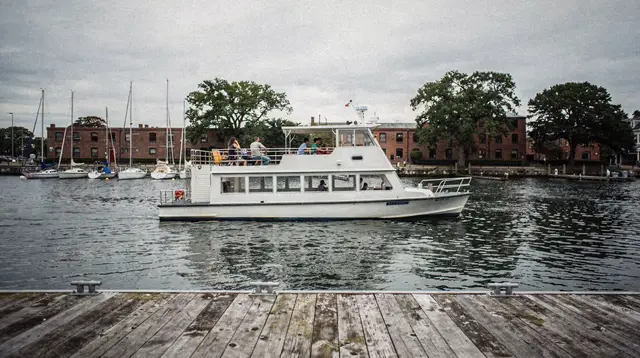
Washington DC Cruises & Boat Tours: Seeing the Capital from the Potomac
Are there boat tours and cruises in Washington, D.C.?
Yes. The Potomac waterfront at Georgetown and The Wharf is the departure point for sightseeing cruises, dinner cruises and small self-driven boats that pass the Lincoln Memorial, the Jefferson Memorial and the Kennedy Center from the water. It's a genuinely different angle on the capital, not a substitute for walking the National Mall itself.
A different angle on a familiar skyline
Nearly everyone who visits Washington sees the city from the National Mall or the sidewalks of Georgetown — on foot, looking up at monuments from ground level. The Potomac River offers the one vantage point that walking tours and day trips out of town never cover: the capital seen from the water that borders it on the Virginia and Maryland sides alike.
This guide is about that river angle specifically — cruises, sightseeing boats and a couple of more unusual small-boat options that depart from the Potomac waterfront, rather than the walking routes covered in Washington’s monuments-and-memorials guides or the out-of-town excursions covered in the day-trip guides.
It’s worth being upfront about what a river cruise is and isn’t. It is a genuinely different, relaxed way to see the Lincoln Memorial, the Jefferson Memorial, the Kennedy Center and the Washington skyline from a low angle across open water, often with the golden light of a Potomac sunset behind it. It is not a way to get onto the National Mall itself, into the free Smithsonian museums, or up to the base of the monuments for a close look — for that, see our dedicated guide to Washington’s monuments and memorials. Most visitors treat a Potomac cruise as an add-on to a Mall day, not a substitute for it.
Where Washington’s boats and cruises actually depart from
Two waterfront areas anchor almost all of the city’s river-based sightseeing:
Georgetown’s waterfront, along the Potomac just downstream from the university and the historic rowhouses, has long been a marina district with restaurants and docks lining the river’s edge. It sits at the upstream end of the capital’s navigable waterfront.
The Wharf, the redeveloped stretch of Southwest Washington’s riverfront, is the newer of the two and has become the busier departure point for sightseeing cruises, dinner boats, water taxis and small self-driven rentals. It sits closer to the Tidal Basin and the National Mall’s southern edge than Georgetown does, which makes it a more convenient stop if you’re combining a boat outing with a Mall day on foot.
Both areas belong to the same stretch of Potomac waterfront that runs through the capital, and a handful of operators run boats between the two, so a Georgetown departure and a Wharf departure aren’t always separate universes — some routes connect them directly along the river.
| Departure point | Character | Typical use |
|---|---|---|
| Georgetown waterfront | Historic marina district, restaurants and rowhouses on the bank | Dinner cruises, water taxis, longer sightseeing loops |
| The Wharf | Newer riverfront development, closer to the Mall and Tidal Basin | Sightseeing cruises, self-driven boat rentals, evening cruises |
What you actually see from the water
A river cruise trades the up-close detail of a walking tour for a wide, unobstructed view of the skyline and riverside monuments that simply doesn’t exist from the sidewalks. Depending on the route and how far along the Potomac it runs, a typical cruise passes:
- The Lincoln Memorial and the riverside edge of the National Mall, visible across the water rather than from the reflecting pool in front of it.
- The Jefferson Memorial, which sits directly on the Tidal Basin and reads very differently from the water than from its own steps.
- The Kennedy Center, whose terrace overlooks the Potomac and is one of the more striking modern silhouettes along the riverbank.
- The wider Washington skyline, low and largely free of the tall towers found in most American capitals, a quirk tied to the city’s height restrictions — from the river you notice how flat and monument-dominated the skyline stays, more than you would walking through downtown streets.
- The Georgetown and Wharf waterfronts themselves, seen as working riverfronts rather than static destinations.
What a standard sightseeing cruise generally does not get you close to are the Capitol, the White House or most of the Smithsonian buildings, none of which sit directly on the river — those stay walking-tour territory, covered in our monuments and memorials guide and national mall walking guide.
The unusual end of DC’s boat options
Beyond a standard sightseeing cruise, Washington’s waterfront has developed a couple of more distinctive small-boat options worth knowing about specifically because they don’t exist in most other capital cities.
A heated hot-tub boat cruise on the Potomac is the more unusual of the two: a small group soaks in a heated tub built into the boat itself while it cruises past the riverside monuments, which is a genuinely different way to spend an hour on the water than sitting on a standard cruise bench, and works especially well on a cooler evening.
At the other end of the spectrum, a self-driven boat rental departing from The Wharf, with a route map provided, lets a small group take the wheel themselves rather than joining a guided cruise — a way to set your own pace along the waterfront without booking a full guided tour, and a genuinely different experience from every walking-based option covered elsewhere on this site.
Both sit firmly in “you won’t find this anywhere else in the city” territory, and both are the kind of thing worth booking in advance rather than showing up and hoping for a same-day slot, since small-boat capacity is limited.
Cruise types at a glance
| Type | What it’s built around | Best paired with |
|---|---|---|
| Sightseeing cruise | Passing monuments and skyline by day | A National Mall day, seen from a fresh angle afterward |
| Sunset or evening cruise | Golden light on the monuments, cooler air | Dinner beforehand at Georgetown or The Wharf |
| Dinner cruise | A meal served on board while cruising | Couples or groups wanting one combined evening out |
| Hot tub boat | A heated tub built into a small boat | A relaxed, low-key alternative to a standard cruise |
| Self-driven rental | Steering your own small boat with a route map | Groups who want to set their own pace on the water |
Exact schedules, seasons and pricing are set by individual operators and change over time, so this guide deliberately doesn’t quote figures that would go stale — check current departure times directly when booking.
Timing a Potomac cruise around Washington’s seasons
Washington’s climate is humid subtropical: summers regularly climb past 90°F (32°C) with afternoon thunderstorms, which makes an open-air cruise in the early evening — after the day’s heat breaks but before dark — a genuinely more comfortable choice than a midday sailing. Winters are milder but bring occasional snow that can disrupt outdoor river traffic for a day or two, and late summer into early autumn carries a tail of Atlantic hurricane activity that can bring heavy rain and localized flooding even this far inland, occasionally affecting river operations. None of that is unique to boat tours, but it’s worth knowing before booking a fixed departure time months ahead.
If you’re timing a visit around the Tidal Basin cherry blossoms, remember that peak bloom is a forecast the National Park Service updates weekly, not a fixed date — the long-term average lands around April 3, though recent seasons have trended earlier, into late March. A cruise timed to catch blossoms from the water carries the same scheduling uncertainty as viewing them from the Tidal Basin on foot; building in flexible dates matters more than picking one calendar day. See our full cherry blossom festival guide for how that forecast works.
How a river cruise fits into a DC trip
A Potomac cruise works best as one component of a broader visit rather than the centerpiece of it. Most travelers slot it in as:
- A relaxed close to a heavy walking day on the National Mall, when feet are tired but there’s still daylight or a sunset left to use.
- An evening activity that pairs naturally with dinner at Georgetown or The Wharf, since both waterfronts are also dense with restaurants.
- A different kind of outing on a second or third day of a longer stay — our two-day Washington itinerary has room to fit a cruise into an evening slot without crowding out the monuments and museums that need full daylight hours.
- A comparison point against Washington’s other water-based options — the Chesapeake region’s own boat culture is covered separately in our Chesapeake Bay cruises guide and Annapolis cruises guide, both a step outside the capital itself. For a side-by-side look at how DC’s river cruises stack up against those regional options, see Potomac cruises compared.
For visitors arriving from further afield — New York in particular — a Potomac cruise sometimes gets folded into a single long day that also covers the Mall, especially when the DC visit itself is structured as a full-day guided tour of Washington departing from New York City. It’s a long day by any measure, but it does mean a river cruise and a monuments walk can both happen within the same single-day trip rather than requiring an overnight stay.
Day versus night on the water
Whether a day or evening cruise suits your trip better comes down to what you want out of it. A daytime sailing gives clearer photos and easier orientation — you can actually see how the monuments relate to each other along the bank. An evening or sunset cruise trades some of that clarity for atmosphere: warmer light, cooler air, and monuments that are lit after dark, echoing the fact that the National Mall memorials themselves stay open and lit 24 hours a day even though rangers aren’t there overnight.
Our broader comparison of day tours versus night tours in Washington covers this trade-off in more depth if you’re deciding between the two for your whole visit, not just the cruise.
Common mistakes with DC’s river cruises
A few misconceptions come up often enough to flag directly. A river cruise does not replace a walk on the National Mall — you’ll pass the Lincoln and Jefferson Memorials from across the water, but you won’t set foot near the Capitol, the White House or the Smithsonian buildings, none of which front the Potomac.
A cruise also isn’t the same activity as the region’s Chesapeake Bay boating — Annapolis, Baltimore’s Inner Harbor and the wider Chesapeake are a separate body of water with their own cruise culture, covered in their own guides rather than folded into this one. And because small-boat options like the hot tub cruise and the self-driven rental run limited capacity, treating them as a same-day walk-up option is the most common way to be disappointed — book ahead.
Finally, don’t assume a single fixed schedule holds year-round: Washington’s seasonal swings, from summer thunderstorms to occasional winter snow to the tail of hurricane season in early autumn, genuinely affect river operations, so checking current timing with the operator close to your travel dates is worth the extra step.
Georgetown and The Wharf beyond the boats
Both waterfront areas reward time spent on land as well as on the water. Georgetown’s riverside stretch mixes historic rowhouses with the marina itself, and a slower look at that neighborhood is covered in our piece on Georgetown’s waterfront in an afternoon.
The Wharf, being the newer development, has its own restaurant and entertainment scene built directly onto the water’s edge — worth a wander before or after any cruise departing from there. And if you’re chasing the best photo angles of the city generally, from the water or otherwise, our best viewpoints over Washington rounds up the other spots worth knowing, on top of what the river itself offers.
Frequently asked questions about DC’s cruises and boat tours
Where do Washington DC boat tours and cruises leave from?
The two main departure points are the Georgetown waterfront and The Wharf, both on the Potomac River within the capital region rather than out in Maryland or Virginia. Both areas sit inside the wider Potomac waterfront corridor that also holds Washington’s marinas and riverside restaurants.
What do you actually see from a Potomac cruise in DC?
Riverside views of the Lincoln Memorial, the Jefferson Memorial, the Kennedy Center and the Washington skyline, plus the Georgetown and Wharf waterfronts themselves, are the core sights. It’s a wide, low-angle view of monuments most visitors have only seen from the ground on the National Mall.
Can you drive your own boat on the Potomac in DC?
Self-driven boat rentals do exist along the DC waterfront, typically with a map or route guide provided and no boating license required for the small craft used on these outings, though exact requirements and routes vary by operator.
Is a hot tub boat tour a real thing in Washington DC?
Yes — heated hot-tub boats are one of the more distinctive small-group options on the Potomac in DC, combining the river view with a soak rather than standard bench seating.
Do river cruises in DC also cover day trips further out?
A DC river cruise itself stays on the Potomac in the capital, but some tour operators bundle the DC visit into a longer day trip from New York, so travelers based in New York sometimes combine both bookings into one day.
Is a boat tour a good substitute for walking the National Mall?
No — a Potomac cruise adds a river perspective on the skyline and a handful of riverfront monuments, but it does not get you onto the Mall itself, into the Smithsonian museums, or up close to the Capitol and the White House. Most visitors treat it as an add-on, not a replacement for a walking day.
What’s the best time of day for a DC boat tour?
Late afternoon into sunset is popular because the monuments catch warm light from the water and the heat of a Washington summer afternoon eases off; an evening or dinner cruise adds the monuments lit up after dark, which is when the National Mall memorials themselves are also open around the clock.
Do prices and schedules for Potomac cruises change by season?
Yes, in practice — river traffic and daylight both shift across the year, and DC’s humid subtropical summers versus mild winters change how comfortable an open-deck cruise feels, so it’s worth checking current departure times and season directly with an operator rather than assuming a single year-round schedule.
Cruises and Boat Tours
Verified deep-linked GetYourGuide tours. Book through these links and we earn a small commission at no cost to you.
GetYourGuide does not provide a product photo for this activity — the image shows the meeting point, photographed by us.