Georgetown's Waterfront in an Afternoon
What is there to do in Georgetown for an afternoon?
Georgetown rewards slow walking rather than sightseeing: the C&O Canal towpath, the cobblestone shopping streets, and the Potomac riverfront behind the old warehouses. There are no must-see monuments here, and no Metro station in the neighborhood itself.
I keep coming back to Georgetown for the same reason I never bring a checklist. There is nothing here that demands to be photographed in front of, no plaque insisting I read every word. What there is, is water — a slow brown canal running behind the shops, and the wider, faster Potomac just a block further on — and a couple of hours in the afternoon is exactly the right amount of time to let both of them set the pace.
I want to be upfront about what this walk is not. It is not the National Mall, that two-mile patriotic line from the Capitol to the Lincoln Memorial that I’ve written about separately as a walking guide — no marble, no museums, no free timed-entry passes to think about. And it is not The Wharf, the newer, glossier riverfront development downtown with its own restaurant rows and fish market. Georgetown’s waterfront is older, quieter, and a little more work to love. That’s the point.
Getting there is the first thing people get wrong
Here’s the practical correction I wish someone had given me before my first visit: Georgetown has no Metro station of its own. Every other neighborhood I cover on this site — Capitol Hill, the National Mall, even Arlington across the river — sits on a rail line. Georgetown does not, and it never has, a quirk of 19th-century property owners who kept the original streetcar out.
So you arrive on foot from Dupont Circle or the Mall (a flat, pleasant 20-25 minutes), by one of the DC Circulator or Metrobus routes that run along M Street and Wisconsin Avenue, or by taxi or rideshare, which is what most visitors end up doing without knowing there was ever another option. Plan the extra 15 minutes either way; don’t expect to pop out of a station already standing on the cobblestones.
Starting on the canal, not the river
I always start at the C&O Canal, not the Potomac itself, because the canal is the calmer of the two and it eases you in. The towpath runs along the water at a walking pace that nothing can rush — mule-drawn barges used it in the 19th century to move coal and flour down from the Appalachians, and today it’s joggers, dog walkers, and people like me who just want fifteen minutes without a destination.
The water is still enough to hold reflections of the old industrial buildings that back onto it, brick warehouses that have been turned into shops and restaurants without losing their locks-and-towpath bones. I like walking a few blocks of the towpath west from Thomas Jefferson Street, then cutting back up into the neighborhood through one of the narrow alleys — there’s always one more than the map suggests.
Then down to the river itself
From the canal it’s a short drop in elevation, maybe five minutes, down to the Potomac waterfront proper, where Georgetown’s newer riverside park and boardwalk face the water and Virginia’s tree line on the far bank. This stretch has none of the density of The Wharf’s restaurant scene; it’s more benches than storefronts, more rowers gliding past than crowds.
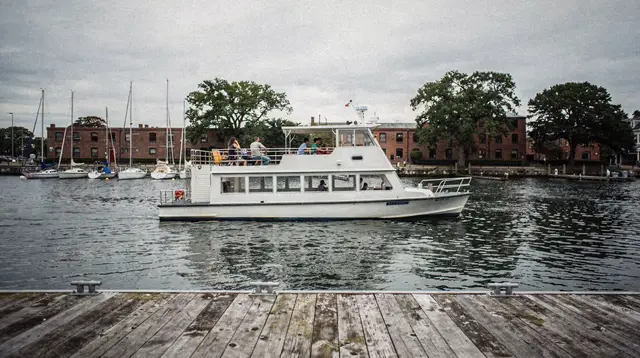
Boathouses line this part of the river, and in the warmer months I’ve watched college crew teams pull past in perfect rhythm while paddleboarders drift the opposite way, ignoring the current entirely. If I have an extra hour, this is where a short cruise makes sense — Georgetown is one of the easier put-in points for a Potomac boat trip, and seeing the waterfront from the water reframes everything I’ve just walked past on land.
The shopping streets, treated as a detour, not the plan
M Street and Wisconsin Avenue are Georgetown’s commercial spine, and I do walk them, but I treat the shops as a detour from the water rather than the reason for being there. If I want the streets themselves to make more sense, I’ve joined a Georgetown history and architecture walking tour, which ties the rowhouses and old warehouses back to the neighborhood’s canal-era past better than I can on my own.
It’s a mix of small boutiques, a few chain stores that could be anywhere, and enough independent cafés that I never plan lunch in advance — I just stop when something looks right. If I do want to plan lunch, a Georgetown food tour is the version of this walk built around eating rather than wandering, with a local guide choosing the stops instead of me. The rowhouses on the residential side streets just off the main drag are worth the five-minute wander too: Federal-style brick, painted shutters, gas lamps that are still lit by hand in a few spots. None of it is a sight in the National Mall sense. It’s a neighborhood that happens to have water on two sides.
For the architecture specifically — the Federal rowhouses, the old warehouse conversions, the way the street grid still follows the canal rather than the modern city — there’s also a dedicated Georgetown architecture walking tour that goes deeper into the building history than I can cover on a casual pass through.
Georgetown versus Old Town Alexandria
People visiting for the first time sometimes ask me whether they should do Georgetown or Old Town Alexandria if they only have time for one historic riverfront neighborhood — I’ve laid out the actual differences in a separate comparison guide, but the short version is that Georgetown is inside DC and reachable on foot from the Mall, while Alexandria is a short trip into Northern Virginia and reads as more of a full day trip in its own right. Both sit on the Potomac; neither has a Metro stop that drops you right at the water.
Georgetown after dark
The neighborhood I describe above is a daytime one — cafés, shops, the towpath in afternoon light. Come back after sunset and it’s a different place, with the same warehouses and alleys taking on the reputation the neighborhood is known for in some circles: old smuggling tunnels, Underground Railroad stops, and enough ghost stories that a few operators run tours built entirely around them. I’ve done the Ghosts of Georgetown tour past the Exorcist steps, which uses the same streets I walk in daylight but tells a completely different set of stories about them, and there’s a similar Georgetown spies and ghosts walking tour if you’d rather mix Cold War history in with the hauntings. For a broader look at the city’s evening tour options beyond this one neighborhood, I’ve also written up DC’s ghost tours and where to go for bars and nightlife once the walking is done.
Georgetown’s Cold War history runs deeper than the ghost stories, too — Wisconsin Avenue and the residential streets above the canal housed more real intelligence officers than any tour guide can fully cover on foot, and a dedicated Georgetown spy tour led by a former CIA officer goes further into that history than the standard architecture walk does. If spy history across the wider city interests you beyond this one neighborhood, I’ve written more about it in a guide to DC’s spy and crime tours.
What I skip, and why
I don’t try to combine this with a full Mall day. The two neighborhoods sit close together on a map but feel like different cities, and rushing between them turns both into a blur — I’d rather do the Mall properly on a different day and give Georgetown its own slow afternoon. I also skip trying to “do” both the canal and the full riverfront boardwalk in one pass if I’m short on time; picking one and lingering beats covering both at a jog. And if evening is approaching, I’ve found the neighborhood shifts mood entirely after dark — worth returning for on its own, ideally with an evening tour built for exactly that shift in light.
Georgetown Waterfront FAQ
Is there a Metro station in Georgetown?
No. Georgetown is one of the few central DC neighborhoods without its own Metro stop. The closest stations (Dupont Circle, Foggy Bottom) are a 20-25 minute walk away, so most visitors arrive by bus, taxi, rideshare, or on foot from the Mall.
How is this different from the National Mall?
The National Mall is a two-mile line of monuments and free Smithsonian museums between the Capitol and the Lincoln Memorial — a purposeful, sight-by-sight walk. Georgetown’s waterfront has no monuments at all; it’s a canal towpath, a riverside park, and a shopping neighborhood meant for wandering rather than checking things off.
How is this different from The Wharf?
The Wharf is a newer, purpose-built riverfront development downtown with a dense strip of restaurants, a fish market, and a marina scene. Georgetown’s waterfront is older and quieter, built around a historic canal and a more residential stretch of the Potomac, with far fewer big-name restaurants.
How much time should I set aside?
Two to three hours covers the canal towpath, a stretch of the riverfront, and a bit of the shopping streets at an unhurried pace. Add an hour if you want a boat trip on the Potomac from here.
Is Georgetown walkable from the National Mall?
Yes, it’s a flat 20-25 minute walk from the western end of the Mall, or a similarly short bus or rideshare ride. There’s no rail connection, so budget the extra time either way.
Is there a fee to walk the C&O Canal towpath?
No, the towpath itself is free and open to walk at any time. Some canal boat rides and guided programs elsewhere along the canal do charge, but the Georgetown stretch of towpath has no entrance fee.
What’s the best time of day to visit?
Late afternoon into early evening works well: the crowds on the shopping streets thin out, the light on the river turns golden, and the neighborhood’s evening character starts to show, which is also when an after-dark tour of the city makes a nice follow-on.
Can I combine this with a boat tour?
Yes — Georgetown is a convenient launch point for Potomac cruises, and seeing the waterfront from the water afterward adds a different perspective on the same stretch of riverbank you’ve just walked.
Watersports
Verified deep-linked GetYourGuide tours. Book through these links and we earn a small commission at no cost to you.
GetYourGuide does not provide a product photo for this activity — the image shows the meeting point, photographed by us.