Washington DC Ghost Tours: The Capital After Dark
What are Washington, D.C.'s ghost tours actually like?
They are guided evening walks through the city's oldest quarters — think Georgetown's cobbled lanes or the streets around Capitol Hill — where a storyteller-guide leads a small group on foot, weaving Civil War history, old scandals, and local legend into the walk. They're a narrative, after-dark companion to daytime sightseeing, not a replacement for it.
An evening layer on top of a daytime city
Washington, D.C. is built for daylight sightseeing. The National Mall is nearly two miles from the Capitol to the Lincoln Memorial, and by the time most visitors have covered even a fraction of the Smithsonian museums, the free outdoor monuments and memorials, and a walk through Capitol Hill, the sun is already going down. That leaves a genuine gap in the evening — and a Washington ghost tour is one of the more interesting ways to fill it, precisely because it isn’t trying to be a second version of the same daytime sightseeing.
A ghost tour here is a guided, on-foot walk through one of the city’s older, denser historic quarters — most often Georgetown or the residential streets near Capitol Hill and Lafayette Square — led by a guide who works as much as a storyteller as a historian. The route stays fixed on real streets and real buildings, but the material layered onto it mixes documented Civil War history, political scandal, and local legend that has built up around the capital over two centuries. It’s less a fact-dense briefing and more a narrated evening walk, and that distinction matters when you’re deciding whether it’s worth an evening of a short trip.
This page is deliberately narrow: it explains what the format is, where it tends to operate, and who it suits, without inventing details the underlying research doesn’t support. No prices, durations, or start times are given here, because none were confirmed for this category — check the specific tour’s own listing for that. What follows instead is the framing you need to decide if an evening ghost walk fits your trip, and how it sits next to everything else on your DC itinerary.
Why the evening is different from the Mall
The daytime core of a Washington visit — the White House, the Capitol, the Smithsonian museums — runs on federal hours, advance reservations, and timed-entry passes. It’s an itinerary built around institutions. The evening is a different register entirely. Once the government buildings close and the museum crowds thin, the historic residential neighborhoods around them take over as the interesting part of the city, and that’s exactly the terrain a ghost tour uses.
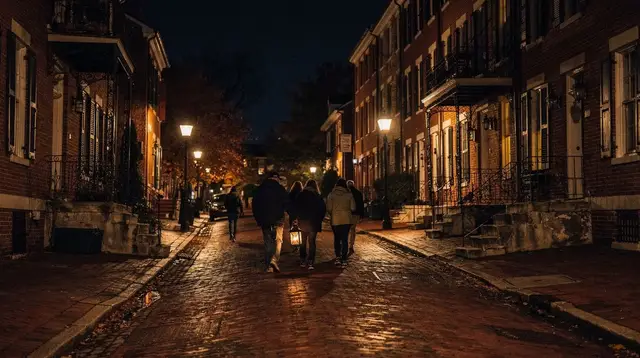
Georgetown in particular works for this kind of storytelling because its narrow, cobbled streets and 18th- and 19th-century townhouses were never rebuilt on the same monumental scale as the federal core. It reads, after dark, as a much older town than the marble city a few blocks away. The blocks around Capitol Hill carry a different flavor of the same idea — rowhouses, old taverns, and the kind of political intrigue that accumulates around a seat of government for two hundred years. Either setting gives a guide plenty of material without needing to dramatize anything that isn’t there.
It’s worth being clear about what a ghost tour is not. It is not a nighttime substitute for visiting the National Mall — the Mall’s memorials are free, outdoor, and open 24 hours, so an evening walk among the Lincoln Memorial or the Vietnam Veterans Memorial is entirely possible on your own, and some visitors do exactly that as a quieter alternative to a guided walk.
A ghost tour is also not a food tour: it doesn’t move meal to meal, and it isn’t built around tasting. And it isn’t a seasonal event the way the cherry blossom bloom is — there’s no forecast to time it around, which if anything makes it one of the easier evening activities to slot into a trip regardless of when you’re visiting.
Where these tours tend to operate
Two neighborhoods anchor most of Washington’s evening ghost walks, and each gives the format a slightly different character.
Georgetown is the older of the two in feel. Its riverside position, surviving 18th-century architecture, and history as a separate port town before it was absorbed into the federal city give it a self-contained, almost small-town atmosphere that a guide can lean on heavily. Walking it after dark, with the daytime shopping crowds gone, is a genuinely different experience from walking it at noon — a point worth remembering if you’ve already spent an afternoon there and assume you’ve “done” Georgetown.
Capitol Hill and the streets around Lafayette Square, closer to the seat of government itself, lean more on political history — the kind of scandal, rivalry, and wartime tension that naturally clusters around a capital city. This is also the area where a guide is most likely to fold in stories tied to the Civil War period, since Washington itself was a garrison city through much of that war, a detail that doesn’t always make it into a standard Capitol tour.
Neither route substitutes for a daytime visit to the sites in the same neighborhoods. A ghost tour through Capitol Hill’s streets, for instance, has nothing to do with actually touring the Capitol building or watching Congress in session — those require their own separate reservations and passes entirely.
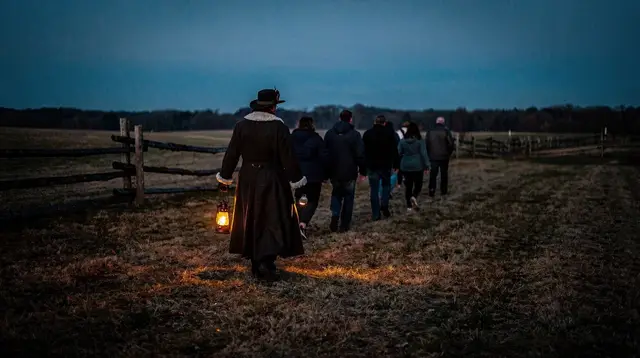
a guided evening walk through the city’s historic quarters after dark is a straightforward way to try the format without having to research routes yourself, and it removes the guesswork of picking a neighborhood — the guide’s route is already set.
How a ghost tour fits into a real DC schedule
The honest case for a ghost tour is timing, not novelty. Washington rewards long days — the Mall alone takes real walking, museums easily swallow half a day each, and the outdoor memorials are worth returning to at different times of day for different light and different crowds. By early evening, most visitors are tired of walking past marble and are ready for something with a narrative thread rather than another set of exhibits.
That’s the slot a ghost tour occupies well: after dinner, once the federal buildings are closed anyway, in a neighborhood you may not have had a structured reason to explore on foot otherwise. It doesn’t compete with the daytime itinerary because it isn’t trying to cover the same ground — it’s deliberately working the residential and commercial streets around the monuments, not the monuments themselves.
Where it doesn’t fit as well is on a very short, single-evening stopover. If you’re only in Washington for one night, that evening is probably better spent seeing the illuminated memorials on the Mall for free, since they’re the more iconic reason people come to the city in the first place. A ghost tour earns its place on a trip of two or more days, once the daytime highlights are already checked off and you’re looking for a different texture for the evening rather than more of the same sights.
a lantern-lit evening tour through the city’s older streets is one way to add that texture on a second or third night, particularly if your first evening was already spent on the Mall’s memorials.
Comparing the evening options
| Activity | Time of day | Focus | Best paired with |
|---|---|---|---|
| National Mall memorials, self-guided | Evening, free, open 24h | Monuments, illuminated at night | A day already spent on the Mall |
| Ghost tour, guided walk | Evening | Narrated history and legend in a historic quarter | A day in Georgetown or Capitol Hill |
| Food tour | Daytime | Tasting, local restaurants and markets | A free morning or afternoon |
| Cherry blossom season | Spring, weather-dependent | A seasonal natural bloom around the Tidal Basin | A trip timed to the forecast |
The table is a reminder more than a decision tool: these activities aren’t really competing with each other, since they sit in different parts of the day and rest on different kinds of experience — narrated history after dark, a seasonal natural event, and a daytime tasting circuit are three separate reasons to be out in the city, not three versions of the same one.
Setting the right expectations
A few honest notes, since it’s easy to arrive with the wrong picture of what this activity is.
It is a walking tour first. The “ghost” framing is the narrative device, not a technical production — expect storytelling on foot through real streets, not a haunted-house style attraction. If you’re looking for a scare-focused experience versus a history-and-atmosphere one, that varies by specific tour, so it’s worth checking a given listing’s own description rather than assuming either.
It doesn’t come with the practical details of a museum visit. Because it isn’t a fixed federal site, none of the pass systems, advance-booking windows, or free-admission rules that govern the Smithsonian, the Capitol, or the White House apply here in the same way — a ghost tour is a commercial, guide-led activity, and specifics like exact timing sit with the individual operator rather than with any general rule for the category.
It’s a complement, not a headline. If someone asks what to see in Washington, the honest answer starts with the Mall, the museums, and the memorials — a ghost tour is a good evening add-on for a trip that already has those covered, not a reason on its own to plan a visit.
That framing also helps place it against the city’s spy and crime-themed tours, which draw on a related vein of Washington’s less official history but through a different lens — espionage and political intrigue rather than legend and the supernatural — and against the city’s African American heritage tours, which are a more fact-forward, historically documented look at neighborhoods that a ghost tour route may pass through without covering in the same depth. None of these overlap completely, and a longer stay in the city can reasonably include more than one.
A quarter or two, not the whole city
One more point worth making plainly: a ghost tour route, whether through Georgetown or the Capitol Hill area, covers a slice of the city — one or two historic quarters walked on foot over an evening — not the city as a whole. It’s easy for the phrase “Washington after dark” to sound bigger than the reality of a specific, bounded walking route, and setting that expectation early avoids disappointment.
It’s also worth remembering that Washington, D.C. is not Washington State, that the National Mall is a stretch of parkland and monuments rather than a shopping mall, and that no single evening — guided or not — is likely to feel like it has “covered” a city this dense in history. A ghost tour is one deliberately narrow slice of that history, told well, for one evening.
If a night walk through a historic quarter sounds like the right way to close out a day that started at the Capitol or ended in Georgetown, it’s a genuinely good fit. If you’re choosing between it and your only evening on the Mall, the Mall’s free memorials are the better use of a first, short visit — save the ghost tour for a trip with room for both.
Washington, D.C. ghost tours: frequently asked questions
Are ghost tours in Washington, D.C. suitable for a first visit?
Yes, especially as an evening add-on after a day spent on the National Mall or around Capitol Hill. They work best once you already have a mental map of the city, since the guide references streets and buildings you’ll recognize from daylight.
Do ghost tours replace a visit to the National Mall?
No. The National Mall’s monuments and Smithsonian museums are the daytime core of a DC trip and stay open late in the case of the outdoor memorials, but a ghost tour is a separate, narrative evening activity through historic neighborhoods, not a nighttime version of the Mall itself.
Which parts of the city do these tours usually cover?
Most walk through Georgetown’s historic riverside blocks or the older streets around Capitol Hill and Lafayette Square, since these areas hold the townhouses, taverns, and government buildings the stories are built around.
Can I visit the National Mall memorials at night on my own instead?
Yes — the outdoor memorials are free and open 24 hours, and walking them after dark is a popular, unguided alternative, though the storytelling and historical framing of a ghost tour is a different experience from a self-guided evening stroll.
Is a ghost tour a good fit for families with kids?
It depends on the group and the specific tour’s tone — some lean toward atmospheric history for a general audience, others toward a more theatrical scare factor, so it’s worth checking a tour’s own description for age suitability rather than assuming either style.
How does a ghost tour differ from a food tour or a cherry blossom outing?
A food tour is a daytime, tasting-led experience and the cherry blossom season is a specific, weather-dependent springtime window; a ghost tour is neither seasonal nor culinary — it’s an evening, history-and-atmosphere walk that can generally be done across the year.
Do I need to know DC’s history beforehand to enjoy a ghost tour?
No — the guide supplies the history and legend as you walk, though having already seen places like Capitol Hill or Georgetown by day tends to make the after-dark version land more vividly, since you’re recognizing real streets rather than hearing about abstract ones.
If you’re mapping out how an evening ghost walk fits against everything else on offer, the monuments and memorials guide, a walking tour of the National Mall, and a look at day tours versus night tours in Washington, D.C. are good next stops, alongside the city’s ghost-tour category page and the broader list of things to do in Washington, D.C. For a sense of how the memorials look after dark without a guide, see the memorials after dark.
DC Ghost Tours
Verified deep-linked GetYourGuide tours. Book through these links and we earn a small commission at no cost to you.
GetYourGuide does not provide a product photo for this activity — the image shows the meeting point, photographed by us.