Baltimore Cooking Classes: A Taste of the Chesapeake
Are cooking classes in Baltimore worth it for visitors interested in Chesapeake food?
Yes. Baltimore's cooking classes run in small, hands-on kitchen settings — often local breweries or private studios near the Inner Harbor — and give visitors a direct, participatory look at the region's food culture, which is a different experience from eating in a restaurant or touring a market.
Why Baltimore, Not Washington, for a Cooking Class
Baltimore is not a neighborhood of Washington, D.C. and not part of its federal core — it’s a working port city on the Chesapeake Bay, roughly 35 to 60 minutes north of the capital by car or train. On this site, Baltimore sits in the Maryland region alongside Annapolis and the Chesapeake Bay, a grouping that’s distinct from both the capital region itself and the closer-in Maryland suburbs like Bethesda and Rockville that ring Washington, D.C. proper.
That distinction matters for anyone planning a trip: a cooking class booked in Baltimore is a separate outing from anything happening on the National Mall or in Georgetown, and it requires its own trip north.
What makes Baltimore worth that trip for food-minded travelers is its identity as a genuine Chesapeake Bay port. The city’s food culture has long been shaped by the Bay’s seafood traditions and by waves of immigrant communities that settled around its working harbor. A cooking class here isn’t simply “a cooking class that happens to be in Baltimore” — it’s a way to engage directly with a food culture rooted in a specific place, handled hands-on rather than observed from a restaurant table or a tour bus window.
The Inner Harbor as a Landmark, Not the Whole Story
Most visitors orient themselves in Baltimore around the Inner Harbor, the city’s historic waterfront and its most recognizable landmark. It’s a useful reference point for cooking classes too, since several are held at venues — breweries, studios, kitchen spaces — convenient to that part of the city, even when the class itself isn’t literally on the water.
It’s worth understanding how the Inner Harbor works before using it as your anchor. The harbor itself, including its public promenade, is free to walk. But the attractions clustered around it — the aquarium, the science center, historic ships open for touring — are each separately ticketed. There’s no single Inner Harbor pass that covers everything, and a cooking class near the harbor is not bundled with any of those attractions; it’s booked, priced, and run entirely on its own.
This separate-ticketing pattern is a good way to understand what a cooking class actually is, by contrast. A harbor attraction like the aquarium is a self-guided visit: you buy a ticket, walk through, and leave. A cooking class is structured differently — it’s a fixed-time, small-group, instructor-led session where you’re an active participant from start to finish, not a visitor moving past exhibits.
What a Cooking Class in Baltimore Actually Involves
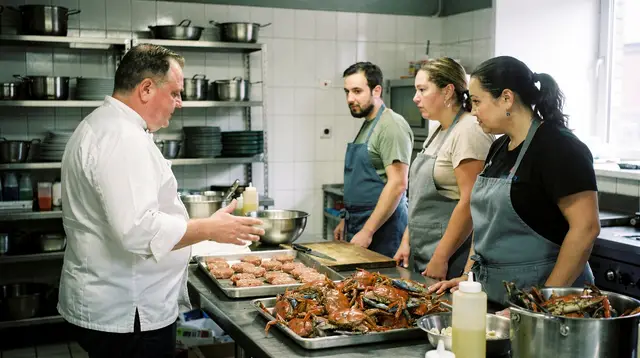
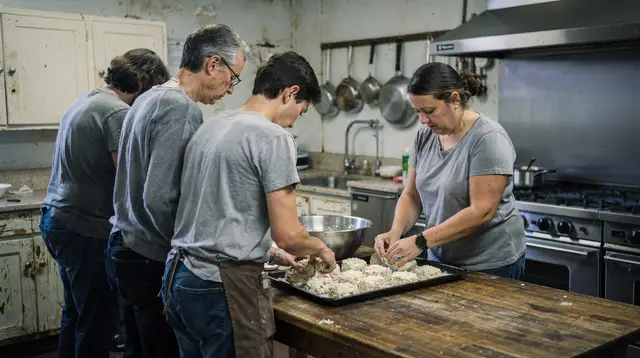
A cooking class is a hands-on kitchen session, typically led by a local chef or instructor, where a small group prepares a specific dish or menu together and then eats what they’ve made. That’s a fundamentally different kind of activity from a restaurant meal, a food tour, or a market visit — all of which involve food but keep you in the role of observer or customer rather than cook.
Baltimore’s class offerings reflect the city’s varied food scene rather than a single narrow theme. You’ll find sessions built around Thai curry, tacos, pad Thai, fresh pasta, and Mexican cooking — several of them set in local breweries, which pairs the cooking session with the kind of casual, social atmosphere a brewery space naturally offers. This variety is worth noting precisely because it complicates a purely “Chesapeake seafood” framing: Baltimore’s culinary identity today is as much about layered immigrant traditions as it is about crab and Bay seafood specifically.
a hands-on Thai curry class in Baltimore is a good example of that range — a session built around building a curry from scratch, guided by a local instructor, rather than a seafood-specific menu. For a different, more casual setting, a pasta-making class held at a local brewery combines the hands-on cooking format with a relaxed brewery atmosphere.
Where Chesapeake Seafood Fits In
The Chesapeake Bay’s seafood traditions, especially its blue crab, are central to why Baltimore has any culinary reputation beyond being “close to Washington.” Crab has a defined seasonal rhythm tied to the Bay’s waters, and it shapes menus across the city in ways that go well beyond novelty dishes. If your interest in Baltimore is specifically about Bay seafood traditions and how they connect to the wider region, that’s a topic covered on its own terms elsewhere on this site, rather than folded entirely into the cooking-class format.
That said, not every cooking class in Baltimore centers on seafood, and the offerings above make that clear — Thai curry, tacos, pad Thai, and Mexican cooking classes are just as available as anything built around the Bay’s catch. The honest framing is that Baltimore’s food scene is broader than crab alone, even as crab remains the dish most associated with the region in outside perception.
More Cooking Class Options Around the City
Beyond the Thai curry, pasta, and Mexican sessions already mentioned, Baltimore’s cooking-class scene runs deeper than a short list might suggest, and the variety is worth spelling out for anyone trying to pick a single class out of several reasonable options. a three-course French feast cooked with a local chef takes the format in a different direction again, away from both the Chesapeake and the Asian- and Latin American-influenced classes covered above. For visitors drawn to noodle-based cooking specifically, a four-course class built around Asian noodles and dumplings pairs well with a dedicated dumpling-making session with a local chef if hand-folded dumplings are specifically what you’re after rather than a broader noodle menu.
Pasta gets more than one entry point too. Where the brewery-based pasta class mentioned earlier pairs cooking with a casual drinking atmosphere, an Italian pasta-making class aimed at beginners is a more traditional, technique-focused setting for anyone who wants to learn the fundamentals without a brewery’s background noise. None of these classes require prior cooking experience; as with the other sessions on this page, an instructor guides the group through each step, so the choice between them comes down to cuisine and setting rather than skill level.
This breadth is part of why Baltimore’s cooking-class scene resists a single label. A visitor expecting only crab-and-Chesapeake sessions will find that seafood-focused classes are the minority, not the rule, among what’s actually bookable in the city — a pattern that mirrors Baltimore’s food scene more broadly, shaped as much by French, Italian, and Asian immigrant traditions as by the Bay itself.
Booking Practicalities: Timing and Group Size
Cooking classes in Baltimore run as fixed-time sessions, typically scheduled for a specific afternoon or evening slot rather than offered on a walk-in basis, so booking ahead matters more than it would for a self-guided attraction like the Inner Harbor’s public promenade. Because each class is capped to keep the group small enough for genuine hands-on participation, popular sessions — particularly ones at brewery venues, which combine the cooking format with a social draw — can fill before a spontaneous same-day booking would work.
That fixed-time structure also makes a cooking class easier to slot into a wider day than a longer excursion would be. A single class typically occupies a defined block of an afternoon or evening rather than an entire day, which leaves room to combine it with other Baltimore activities — a stretch of time at the Inner Harbor, a stop for wine or brewery tasting, or an early food tour elsewhere in the region before heading north for an evening class in the city.
Pairing a Cooking Class With an Evening in Baltimore
Because most classes run in the afternoon or evening, they pair naturally with other after-dark activities in the city rather than standing alone as a full day’s plan. Visitors who want to extend a Baltimore evening beyond the kitchen sometimes combine a cooking class with one of the city’s ghost tours, which run on a similarly compact, small-group format and are typically scheduled for the same evening hours. The two activities don’t overlap in content — one is culinary, the other historical and atmospheric — but they share a rhythm that makes them easy to stack into a single Baltimore night out, whether the cooking class comes first or the tour does.
For a broader sense of how a cooking class fits alongside Baltimore’s full range of things to do, from museums to nightlife to outdoor space along the harbor, the things to do in Baltimore guide is the wider reference point; this page focuses specifically on the hands-on kitchen side of a Baltimore visit rather than the city’s attractions as a whole.
Cooking Classes vs. the Rest of Baltimore’s Food and Drink Scene
Baltimore offers several distinct ways to engage with food and drink, and it’s worth being clear about how a cooking class differs from the others so you can choose the right activity for what you actually want.
| Activity type | What you do | Where the emphasis lies |
|---|---|---|
| Cooking class | Prepare a dish hands-on with a group, guided by an instructor | Active participation, skill-building |
| Food tour | Walk between stops, tasting prepared food along the way | Sampling variety, neighborhood context |
| Wine or brewery visit | Taste drinks, sometimes with a tour of the production space | Drink-focused, often less food-centered |
| Restaurant meal | Order and eat a prepared meal | Passive, service-based |
| Harbor cruise or boat tour | Ride on the water, view the city and harbor | Nautical, sightseeing, not culinary |
That last row matters for anyone comparing options: if what you actually want is time on the water in Baltimore’s harbor, a cooking class won’t deliver that — you’d want a sightseeing or sunset cruise instead. an evening sunset cruise around the Inner Harbor is the nautical counterpart to a cooking class: one puts you at a stove, the other puts you on the water, and they’re genuinely different kinds of Baltimore days.
Not to Be Confused With Annapolis’s Boat-Focused Activities
Annapolis, also in this site’s Maryland region, is closely associated with sailing, boat tours, and cruises on the Chesapeake Bay — its identity leans nautical in a way Baltimore’s cooking classes deliberately don’t. If you’re drawn to the idea of getting out on the water as part of a Chesapeake food-and-drink trip, that’s the register covered by Annapolis’s boat and cruise offerings, not by anything on this page. Here, the framing is the opposite: you stay on land, in a kitchen, and the “Chesapeake” connection comes through ingredients and technique rather than a boat ride.
This distinction is worth being explicit about because the two activities can sound similar in a quick itinerary skim — “Chesapeake food and water experiences” — when they’re actually quite different in practice. A cooking class is indoors, hands-on, and food-focused from start to finish. A Bay cruise is outdoors, passive in terms of food, and focused on scenery and movement across the water.
Other Ways to Spend a Food-Focused Day in Baltimore
Beyond the cooking classes covered here, a few other activities round out a food-and-drink-oriented visit to the city. a Mexican cooking class set at a local brewery is another brewery-based option if you want to pair the hands-on format with a casual drinking atmosphere. And if your Baltimore day includes some non-culinary time as well, an indoor skydiving experience is a popular way to break up a day that’s otherwise centered on food and drink — a genuinely different kind of activity to bookend a cooking class with.
For travelers weighing a full day in the city, it helps to see how a cooking class fits into a broader Baltimore visit rather than as a standalone stop. The things to do in Baltimore overview covers the wider range of attractions, including the Inner Harbor’s separately ticketed sights, while a dedicated look at wine and breweries near Baltimore or Baltimore’s food tours can round out a food-focused itinerary alongside a cooking class.
Getting to Baltimore From Washington, D.C.
Baltimore is roughly 35 to 60 minutes from downtown Washington by car or train, making it a realistic half-day or full-day addition to a DC-based trip rather than a separate vacation. It’s close enough that a cooking class booked for an afternoon or evening in Baltimore can be paired with a morning spent in the capital, though the two cities have genuinely distinct characters and shouldn’t be treated as interchangeable stops on the same itinerary. For the logistics of making that trip, see the dedicated Baltimore day trip from Washington, D.C. guide, which covers transportation options in more detail.
Because Baltimore sits within the same Maryland region as Annapolis and the Chesapeake Bay on this site, it’s easy to combine a Baltimore cooking class with a broader Chesapeake-focused trip — pairing a hands-on kitchen session in the city with time in Annapolis or along the Bay itself, so long as you keep in mind that the water-focused activities belong to those other stops rather than to the cooking classes themselves.
Chesapeake Cooking Classes in Baltimore: Frequently Asked Questions
Is Baltimore part of Washington, D.C.?
No. Baltimore is a separate port city in Maryland, roughly 35-60 minutes from Washington, D.C. by car or train. It sits within this site’s Maryland region alongside Annapolis and the Chesapeake Bay, distinct from the federal district itself and from the Maryland suburbs closer to DC, such as Bethesda and Rockville.
Do cooking classes in Baltimore focus on Chesapeake Bay cuisine?
Some do, given the region’s strong association with crab and other Bay seafood, but Baltimore’s class offerings are broader than that: you’ll also find sessions built around Thai curry, tacos, pad Thai, pasta, and Mexican cooking, often reflecting the city’s varied immigrant food traditions rather than a single regional cuisine.
Where in Baltimore do cooking classes typically take place?
Venues vary by provider and can include local breweries, private studios, and kitchen spaces around the city, with several convenient to the Inner Harbor. Each class is its own separately booked activity, run independently of the Inner Harbor’s ticketed attractions.
Is a cooking class in Baltimore the same as an Inner Harbor cruise?
No. A cooking class is a shore-based, hands-on kitchen activity where you prepare and eat food at a fixed location. A harbor cruise or sightseeing boat is a separate, waterborne activity; if you’re after the nautical side of a Baltimore visit, that belongs to boat tours rather than cooking classes.
How does a cooking class compare to just eating at a Baltimore restaurant?
A restaurant meal is passive: you order and are served. A cooking class is participatory — you handle ingredients, learn techniques, and typically eat what you make alongside a small group, guided by a local instructor or chef.
Do I need cooking experience to take a class in Baltimore?
Classes aimed at visitors are generally designed for a general audience rather than experienced cooks, with an instructor guiding the group through each step. Specific skill expectations vary by provider, so check the individual class listing for details.
Are there other food-focused activities in Baltimore besides cooking classes?
Yes. Baltimore also has food tours, wine and brewery experiences, and its Inner Harbor waterfront, which hosts separately ticketed attractions such as the aquarium and science center alongside a free public promenade.
Cooking Classes
Verified deep-linked GetYourGuide tours. Book through these links and we earn a small commission at no cost to you.
GetYourGuide does not provide a product photo for this activity — the image shows the meeting point, photographed by us.