Richmond Day Trip from Washington, D.C.
Is Richmond worth a day trip from Washington, D.C.?
Yes — Richmond is roughly 2.5 to 3 hours south of DC by car or train, and it works as a living, present-day state capital rather than a museum-piece, with Civil War history, a walkable historic core, and a modern food and arts scene that Williamsburg and Yorktown don't offer.
Why Richmond deserves its own day, not just a stop near Williamsburg
Most itineraries out of Washington lump Richmond in with the colonial trio further down the peninsula — Colonial Williamsburg, Jamestown, and Yorktown. That pairing undersells it. Williamsburg, Yorktown, and Jamestown are, by design, museum-pieces: costumed interpreters, reconstructed 18th-century streets, and a single frozen moment in the colonial and Revolutionary story.
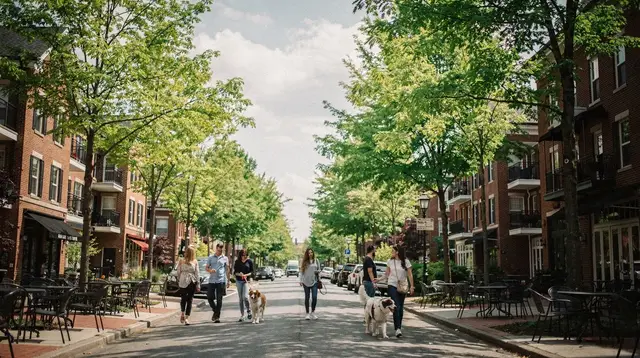
Richmond is something different — a real, functioning state capital with a downtown, a legislature, a university district, and a modern restaurant and arts scene layered on top of one of the most consequential chapters in American history: its four years as the capital of the Confederate States of America during the Civil War.
That distinction matters when you’re planning time from DC. If you want the colonial reenactment experience, that’s Williamsburg’s day trip page or Yorktown’s. If you want a living city whose historical weight comes from the 1860s rather than the 1770s — plus a food and nightlife scene that a costumed-interpreter town simply can’t offer — Richmond is the better single-day target, and with roughly two dozen bookable tours and activities on record, it has the depth to fill a full day on its own rather than functioning as an afternoon add-on.
For a fuller rundown of what to do once you’re there beyond the tours highlighted below, see our complete things to do in Richmond guide, which covers the neighborhoods, museums, and outdoor options this page doesn’t have room to detail in full.
Getting to Richmond from DC
Richmond sits about 100-110 miles south of Washington, comfortably in the same driving bracket as Williamsburg, Yorktown, and Virginia Beach — call it 2.5 to 4 hours door to door depending on traffic and which route you take.
| Mode | Typical time | Notes |
|---|---|---|
| Car (I-95 South) | 2-2.5 hrs off-peak, 3-4 hrs with traffic | I-95 through Northern Virginia backs up badly at rush hour and on Friday/Sunday travel windows |
| Amtrak | ~2-2.5 hrs | Direct service from Union Station to Richmond’s Main Street or Staples Mill stations |
| VRE (Virginia Railway Express) | ~2.5-3 hrs with connections | Cheaper than Amtrak, fewer daily departures, best for a planned early start |
Whichever way you arrive, Richmond’s compact core — downtown, Church Hill, and Carytown — is walkable or a short rideshare apart, so you don’t need a car once you’re there unless you’re also headed out to the surrounding countryside.
Downtown street parking is metered and can be tight near the government buildings on weekdays, so if you’re driving in for a one-day visit, it’s simplest to park once in a garage near the Capitol or in Church Hill and cover downtown, Church Hill, and Carytown on foot or with short rideshare hops rather than moving the car between neighborhoods. Traffic on I-95 south of DC follows the same general pattern documented in our driving and parking guide: the worst backups cluster around the Springfield interchange just south of the city and again near Fredericksburg, so a departure before 9am or after 10am on a weekday avoids most of the delay in both directions.
The Virginia State Capitol and downtown’s government core
Richmond’s downtown centers on the Virginia State Capitol, a working seat of state government whose public grounds sit within easy walking distance of the Confederate-era landmarks covered on the historian-led walk above. Unlike the reconstructed government buildings at Williamsburg, this is an active capitol still in daily use — legislators, staff, and ordinary state business continue around the historical markers, which is part of what makes Richmond read as a lived-in city rather than a preserved one. The blocks immediately surrounding the Capitol also hold the bulk of Richmond’s Civil War-era museums and monuments, so a self-guided downtown walk naturally overlaps with the historian tour’s territory even if you explore it on your own afterward.
The Confederate-capital chapter, and how the city treats it
For four years, Richmond was the seat of government for the Confederacy, and that history is inseparable from the built environment downtown — statehouse buildings, wartime landmarks, and neighborhoods that saw the war’s final collapse in 1865. It’s a heavier, later, and more contested period than the colonial settlement story told at Williamsburg and Jamestown, and Richmond’s museums and guided tours increasingly present it alongside — not separate from — the city’s deep African American history, both under slavery and after emancipation. A guided historian-led walk is the most efficient way to get the full arc in a few hours rather than piecing it together site by site.
a historian-led walking tour through Richmond’s Confederate-era and Civil War landmarksFor visitors who want that history centered specifically on African American experience — enslaved life, free Black communities, the Reconstruction era, and civil rights history that followed — Richmond has dedicated programming built around exactly that angle, distinct from the general Civil War narrative.
a tour focused on African American history across Richmond’s neighborhoodsChurch Hill: historic streets, real food
Church Hill is Richmond’s oldest residential neighborhood, sitting on a rise above downtown with rowhouses, church steeples, and views back over the James River and the skyline. It reads as genuinely lived-in rather than staged — occupied homes, working churches, and neighborhood restaurants rather than roped-off exhibits. A food-focused walk through it pairs the neighborhood’s history with an actual meal, which is a fundamentally different experience from touring a recreated colonial tavern.
a walking food tour through Church Hill’s historic streets and restaurantsCarytown and the more contemporary side of the city
If Church Hill is Richmond’s historic face, Carytown is its present-day one — a mile-long strip of independent shops, vintage stores, and restaurants that has nothing to do with any 18th- or 19th-century interpretation. It’s worth building in specifically because it’s the clearest evidence that Richmond isn’t a museum: this is a neighborhood locals actually shop and eat in on a Tuesday night, not a historical set piece.
a food-and-shopping walk through the Carytown districtGhost tours, true crime, and Richmond’s darker history
Richmond’s long history as a river port, wartime capital, and 19th-century city has left it with a substantial catalog of dark-history and true-crime programming — more than either Williamsburg or Yorktown offer, since those towns’ interpretive focus stays fixed on the colonial and Revolutionary period rather than later crime and scandal. Two options worth knowing about: a citywide dark-history walk centered on 19th-century unrest, and a campus-focused ghost walk near VCU.
a walking tour covering Richmond’s 1870 municipal unrest and darker civic history an evening ghost walk around Richmond’s university campus districtIf true crime specifically interests you more than general dark history, there’s a dedicated tour for that angle too — worth booking as an evening add-on if you’re staying past dinner rather than doing a strict day trip.
a true-crime focused walking tour through downtown RichmondMore ghost walks, if Church Hill or downtown appeal most
Beyond the campus-focused ghost walk and the citywide dark-history tour already covered above, Richmond has additional ghost-walk options concentrated specifically in its oldest neighborhoods. If Church Hill’s 18th- and 19th-century streets are what drew you to Richmond in the first place, a ghost walk that stays inside that neighborhood covers different ground than the citywide or campus versions, focusing on the rowhouses and churches rather than downtown’s government-district landmarks.
a guided ghost walk through historic Church HillFor a broader haunted-history framing that pulls in more of downtown alongside Church Hill, a separate guided option covers Richmond’s reputation as one of Virginia’s more haunted cities, tying its Civil War-era losses to the ghost stories that followed.
a haunted-history ghost tour spanning downtown Richmond and Church HillA practical one-day plan
| Time | Activity |
|---|---|
| Morning (arrive ~10-11am) | Historian-led walk through downtown and the Confederate-capital sites |
| Early afternoon | Lunch and a walk through Church Hill |
| Mid-afternoon | Carytown for shopping, coffee, or a food tour |
| Early evening | Dinner downtown, or an Arts District walking-food tour if you’re staying later |
| Evening (optional, if overnighting) | A ghost walk or true-crime tour before heading back |
Richmond’s Arts District, just downhill from Carytown, has its own emerging food and gallery scene worth a look if you have the time.
a walking food tour through Richmond’s Arts DistrictFor a faster-paced overview that skips walking entirely, a bus-based offbeat history tour covers more ground in less time — useful if your day trip window is closer to the tight end of the 2.5-4 hour drive.
a bus tour covering Richmond’s offbeat and lesser-known historyRichmond vs. the colonial trio: a quick comparison
| Richmond | Williamsburg / Yorktown / Jamestown | |
|---|---|---|
| Historical focus | Civil War era (1861-65) as Confederate capital, plus African American history through Reconstruction | Colonial settlement and the Revolutionary War (1600s-1780s) |
| Character | A real, functioning present-day state capital | Living-history museum sites with costumed interpreters |
| Best for | Travelers who want depth without reenactment | Travelers who want an immersive colonial-era experience |
| Distance from DC | ~2.5-3 hrs (up to 4 with traffic) | Similar range, ~2.5-4 hrs |
| Evening options | Real restaurants, nightlife, ghost/true-crime tours | Limited after museum-site hours |
If you’re weighing the two directly before booking, our full comparison of Williamsburg, Jamestown, and Yorktown lays out how those three sites differ from each other — useful context once you’ve decided Richmond covers the “real city” half of your trip.
If you’re building a Civil War-focused trip rather than a single day
Richmond’s Confederate-capital history connects directly to the battlefield sites covered in our Civil War battlefields guide, and travelers assembling a dedicated Civil War itinerary rather than a single Richmond day often work the city in alongside Fredericksburg, Gettysburg, and Antietam. Our three-day Civil War trail itinerary sequences those stops so that Richmond’s final-collapse-of-the-Confederacy chapter closes out a trip that starts further north — a different kind of trip than the single day trip covered on this page, and worth considering if the Civil War era specifically is the draw rather than Richmond’s food and arts scene.
Planning notes
Richmond fits the same general day-trip bracket as Virginia Beach and Norfolk — all roughly 2.5 to 4 hours from DC — so if you’re choosing between a coastal day and a capital-city day, distance alone won’t decide it; the maritime theme belongs to the coast, and Richmond’s strength is its urban, historical density instead.
Sales tax in Virginia runs roughly 5.3-6% depending on locality, added at the till rather than included in listed prices, and tipping of roughly 18-20% is standard at Richmond restaurants just as it is in DC — see our tipping and sales tax guide if either is new to you. If you’re building a longer swing through historic Virginia, our historic Virginia three-day itinerary shows how Richmond, Williamsburg, and Yorktown can be sequenced without doubling back.
Richmond day trip: common questions
How far is Richmond from Washington, D.C.?
About 100-110 miles, roughly 2 to 2.5 hours by car outside rush hour, and closer to 3-3.5 hours with typical I-95 traffic. Amtrak and Virginia Railway Express both run direct trains, taking around 2 to 2.5 hours depending on the service.
Is Richmond the same kind of visit as Williamsburg or Yorktown?
No. Williamsburg and Yorktown are costumed, colonial-era living-history sites frozen around the Revolutionary period. Richmond is a working, present-day state capital whose defining historical chapter is later — its role as the capital of the Confederacy during the Civil War — layered underneath a real, modern city.
Can I combine Richmond with Williamsburg in one day?
It’s possible but tight — Richmond and Williamsburg sit about an hour apart, so pairing them from DC turns into a 5-6 hour round trip on the road alone. Most visitors give each city its own day, or its own overnight, rather than rushing both.
What is Richmond best known for historically?
Richmond served as the capital of the Confederate States of America from 1861 to 1865, and that era — along with the city’s deep African American history, both enslaved and free, before and after emancipation — shapes much of what’s preserved and interpreted downtown today, distinct from the colonial period showcased elsewhere in Virginia.
Do I need a car to visit Richmond for the day from DC?
A car is the simplest option and gives you flexibility, but it isn’t required — Amtrak and VRE both connect Richmond’s stations to central DC, and Richmond’s core neighborhoods (Church Hill, Carytown, downtown) are walkable or a short rideshare apart once you arrive.
How many tours or activities does Richmond offer?
Richmond has roughly two dozen bookable tours and activities spanning history, food, ghost walks, true crime, and outdoor rentals — enough variety to treat it as a full destination rather than an add-on stop near Williamsburg.
What’s the best neighborhood to focus on for a first visit?
Church Hill for historic streets and food, and Carytown for a trendier, walkable shopping-and-eating strip, are the two most rewarding areas for a first day trip; downtown adds the state capitol and Confederate-era sites in between.
Is there a state capitol building worth visiting in Richmond?
Yes — the Virginia State Capitol sits at the center of downtown and remains an active seat of state government, with public areas and grounds within walking distance of Richmond’s Civil War-era landmarks and museums.
Can Richmond fit into a longer Civil War-focused itinerary?
Yes — Richmond’s role as the Confederacy’s capital connects naturally to Fredericksburg, Gettysburg, and Antietam, and travelers building a dedicated Civil War trip rather than a single day out of DC often sequence Richmond in as the final stop rather than treating it as a standalone day trip.
Day Trips from Washington
Verified deep-linked GetYourGuide tours. Book through these links and we earn a small commission at no cost to you.
GetYourGuide does not provide a product photo for this activity — the image shows the meeting point, photographed by us.