Richmond Ghost Tours: The Confederate Capital After Dark
What makes Richmond's ghost tours different from Gettysburg or Williamsburg?
Richmond was the political and industrial capital of the Confederacy, not a battlefield or a reconstructed colonial town. Its ghost tours walk real downtown streets — Shockoe Bottom, Church Hill, the old campus district — layering wartime government, imprisonment, and the domestic slave trade under the same blocks people now use as a nightlife district.
A capital’s ghosts, not a battlefield’s
Every Civil War ghost tour in this region tells a different kind of story, and Richmond’s is the one shaped by government, not gunfire. At Gettysburg, the tours follow the aftermath of a three-day battle fought across open farmland. At Williamsburg, they move through a reconstructed 18th-century colonial town built for a different war entirely, fought a century before Richmond’s story even begins.
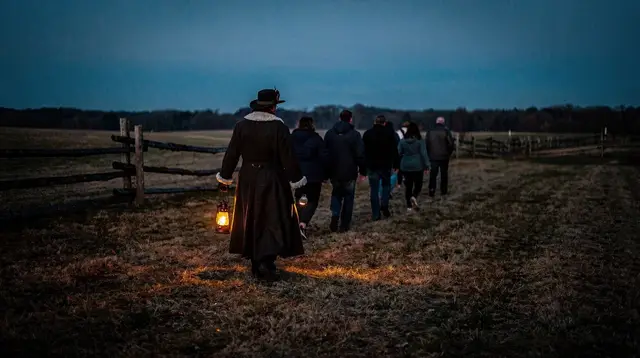
Richmond is neither. For four years, it was the seat of the Confederate government — the place where policy was made, prisoners were held, munitions were produced, and, in the war’s final days, the city itself burned as Confederate forces retreated. Its ghost tours are urban and political rather than rural and tactical, walking the same downtown blocks that once held a wartime capital’s offices, warehouses, and prisons.
That distinction matters for anyone planning a night out around this history. If you came from a battlefield tour expecting cannon positions and troop movements, Richmond will feel different — closer to a walk through a haunted seat of government than a haunted field. If you came from Williamsburg expecting costumed reenactors and colonial storefronts, Richmond will also feel different — it’s a living, working city where 19th-century buildings sit between modern restaurants and offices, and the history is layered rather than staged.
Why Richmond became the Confederate capital
Richmond wasn’t the Confederacy’s first capital — that was Montgomery, Alabama — but the government relocated to Richmond in 1861, drawn partly by the city’s industrial base, including the Tredegar Iron Works, one of the South’s largest manufacturers of artillery and railroad iron. The move also placed the Confederate capital uncomfortably close to Washington, D.C., roughly the distance of a modern two-hour drive, which shaped much of the war’s Eastern Theater strategy: Union forces spent years trying to reach Richmond, and Confederate forces spent years defending it. That proximity is worth sitting with on a Richmond ghost tour — this wasn’t a remote outpost but a capital within striking distance of its enemy’s capital for the entire war.
Richmond held that role until April 1865, when retreating Confederate forces set fire to warehouses to keep supplies from Union troops, and the fire spread through much of the downtown business district. Union forces occupied the city days later. That fire, and the chaotic final collapse of the wartime government, feature heavily in the ghost-tour narratives that follow the guides through Shockoe Bottom and the historic core today.
Shockoe Bottom: the anchor of every tour
Almost every Richmond ghost walk begins or centers on Shockoe Bottom, the low-lying district along Shockoe Creek just east of downtown. Before and during the war, this was Richmond’s commercial and industrial heart — warehouses, markets, and, notoriously, one of the largest domestic slave trading markets in the antebellum South, where enslaved people were bought and sold on a scale that made Richmond second only to New Orleans in the volume of that trade. During the war, the district also held Confederate prisons, including Libby Prison, where captured Union officers were held under conditions grim enough to generate their own body of ghost stories independent of the war’s battles.
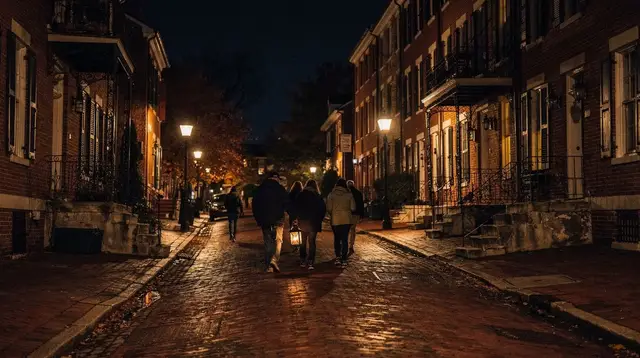
Shockoe Bottom’s low ground made it flood-prone for generations, and its combination of industrial decay, wartime suffering, and repeated disaster is exactly the material ghost-tour guides work with. Many of the original 19th-century warehouse buildings still stand, now housing bars and restaurants, which is part of what makes a nighttime walking tour through the district feel genuinely layered rather than staged for tourists — the buildings are real, and so is most of what happened inside them.
Church Hill and the wartime city beyond Shockoe Bottom
A smaller number of tours extend into Church Hill, Richmond’s oldest residential neighborhood and home to St. John’s Church, associated with Patrick Henry’s “give me liberty” speech from the earlier Revolutionary period — a reminder that Richmond’s haunted history didn’t start with the Confederacy, even if the Civil War dominates most tour narratives. During the war years, Church Hill’s elevated position gave residents a literal view of the fires and chaos below in Shockoe Bottom, including the evacuation fire of April 1865. Some campus-area walking tours also draw on ghost stories tied to Richmond’s university district, which layers in more recent decades of urban history alongside the Confederate-era material.
Richmond today: a state capital, not a Confederate one
It’s worth being direct about a distinction that trips people up: Richmond today is the capital of the Commonwealth of Virginia, a role it has held since well before the Civil War and continues to hold now, with a modern state government, legislature, and governor’s mansion. That present-day political role has nothing to do with its four years as Confederate capital beyond sharing the same streets and, in some cases, the same buildings.
A ghost tour walking past the Virginia State Capitol building is walking past a working seat of state government, not a relic of the Confederacy — the two eras coexist in the same physical space without being the same thing. Guides typically make this distinction clear, but it’s easy for visitors unfamiliar with the city to conflate “Virginia’s capital” with “the Confederate capital,” when the accurate picture is that Richmond was briefly the second and remains permanently the first.
Comparing Richmond to the other Civil War ghost-tour cities
| City | Historical anchor | Tour setting | Best paired with |
|---|---|---|---|
| Richmond | Confederate wartime capital, prisons, slave trade, evacuation fire | Working downtown streets and riverside district | African American history, Civil War trail |
| Gettysburg | Three-day pitched battle | Open battlefield and small town | Battlefield tours, licensed guides |
| Williamsburg | Colonial-era town, predates the Civil War | Reconstructed 18th-century village | Colonial and Revolutionary history |
If you’re building a Civil War–themed trip around the Historic Virginia region, pairing Richmond with Williamsburg or Yorktown gives you contrast rather than repetition — one night in a genuine wartime capital, another day among a reconstructed colonial-era set piece from an earlier conflict entirely.
Choosing between a ghost tour, a historian tour, and a true-crime tour
Richmond’s evening tour options split roughly three ways, and it’s worth matching the choice to what you actually want:
- A walking ghost tour through Shockoe Bottom leans into atmosphere, folklore, and reported hauntings tied to the prisons, warehouses, and the 1865 fire — good for visitors who want storytelling alongside the history.
- A historian-guided tour covers largely the same streets with a heavier emphasis on documented history and less theatrical framing — better suited to visitors whose primary interest is the Confederate-capital period itself rather than ghost stories.
- A true-crime tour shifts focus toward Richmond’s darker criminal history more broadly, which may or may not overlap heavily with the wartime material depending on the specific route.
For the Confederate-capital angle specifically, the historian-led option and the Shockoe Bottom-focused ghost walks are the closest matches.
Practical planning
Richmond sits roughly two hours south of Washington by car on I-95, though that stretches considerably during rush hour or holiday travel, and Amtrak runs direct trains between the two cities as an alternative that avoids parking downtown entirely. Most ghost tours run in the evening, last around 90 minutes to two hours, and cover a mile or two of downtown on foot over uneven brick and cobblestone streets in places, so comfortable footwear matters more than costume-appropriate shoes.
Because the subject matter includes slavery, imprisonment, and wartime death rather than jump-scare theatrics, most operators pitch these tours at adults and older teens. If you’re traveling with younger children, a daytime historian tour or a museum visit may suit the group better than an evening ghost walk.
a Shockoe Bottom evening walk built directly around the district’s wartime prisons and reported hauntings is the most direct match for the Confederate-capital angle. For a deeper dive into the neighborhood’s layered history, another Shockoe Bottom walking route covering the same historic ground from a different guide offers a useful point of comparison.
Visitors who want the history without the theatrical framing can book a historian-led walking tour focused on documented events rather than folklore, while those especially drawn to Richmond’s role in African American history can choose a guided tour centered on the city’s African American history, including its Shockoe Bottom slave-trade era.
Making the most of a Richmond evening
Beyond the ghost walk itself, Richmond’s compact historic core makes it easy to pair an evening tour with dinner in one of the restored Shockoe Bottom or Church Hill warehouse buildings, many of which sit inside the same 19th-century structures the tours discuss. Because the district functions as both a historic site and an active nightlife area, it’s worth booking dinner reservations before your tour rather than after, since post-tour crowds can fill up popular spots quickly on weekend evenings.
For visitors extending their trip into the wider Historic Virginia region, Richmond works well as either a standalone evening stop on a day trip from Washington or as one stage of a longer Civil War trail itinerary that also covers Gettysburg and Fredericksburg.
Because Richmond’s story is political and industrial rather than tactical, it pairs naturally with a museum visit during daylight hours — the American Civil War Museum sits within the historic district and adds context that a nighttime walking tour, by design, only has time to touch on briefly.
Frequently asked questions about Richmond’s ghost tours
What makes Richmond’s ghost tours different from Gettysburg or Williamsburg?
Richmond was the political and industrial capital of the Confederacy, not a battlefield or a reconstructed colonial town. Its ghost tours walk real downtown streets — Shockoe Bottom, Church Hill, the old campus district — layering wartime government, imprisonment, and the domestic slave trade under the same blocks people now use as a nightlife district.
Is Richmond the same as the Confederate capital people read about in Civil War history?
Yes, historically — Richmond served as the Confederacy’s capital for most of the war after the government relocated there in 1861. Today it is simply the capital of the Commonwealth of Virginia, a modern state government seat with no political tie to that 1860s role beyond the buildings and streets that remain.
Do Richmond ghost tours focus on battles?
No. Unlike Gettysburg, Richmond saw no major pitched battle fought through its downtown streets. The tours focus on the wartime capital itself — government buildings, prisons, hospitals, and the neighborhoods that supported and were scarred by that role — plus later stories of disease, fire, and urban decline.
How far is Richmond from Washington, D.C.?
It’s roughly a two-hour drive south on I-95 in typical traffic, though this can stretch considerably during rush hour or holiday weekends. Amtrak also runs direct trains between the two cities.
What is Shockoe Bottom and why does it come up on every tour?
Shockoe Bottom is the low-lying district along Shockoe Creek where Richmond’s warehouses, wartime prisons, and one of the largest domestic slave trading markets in the antebellum South once stood. Its dense, flood-prone history and surviving 19th-century buildings make it the anchor of nearly every Richmond ghost walk.
Are these tours suitable for kids?
Most walking ghost tours in Richmond are pitched at adults and older teens, since they deal directly with wartime death, imprisonment, and slavery rather than jump-scare theatrics. Check the specific tour’s age guidance before booking for younger children.
Should I book a ghost tour or a historian-led tour if I only have one evening?
If your main interest is the Confederate-capital history rather than ghost stories specifically, a historian-guided tour covers the same streets with more historical depth and less theatrical framing. If you want atmosphere and folklore alongside the history, a dedicated walking ghost tour is the better fit.
Is downtown Richmond walkable at night for a tour?
Yes — the historic core covering Shockoe Bottom and Church Hill is compact and tours are designed as walking routes, but wear comfortable shoes since the streets are uneven brick and cobblestone in places.
DC Ghost Tours
Verified deep-linked GetYourGuide tours. Book through these links and we earn a small commission at no cost to you.
GetYourGuide does not provide a product photo for this activity — the image shows the meeting point, photographed by us.